Introduction
Most Australian startups and SMBs begin with the same toolkit: HubSpot for CRM, Xero for finance, Notion for documentation. These tools work — until they don't.
The breaking point looks different for every business. It might be:
- Exporting spreadsheets between three disconnected systems every Monday morning
- A compliance audit revealing your SaaS vendor controls where client data sits
- Watching a competitor ship a product experience your current stack cannot replicate
Australian CIOs commonly report that employees use only a fraction of the software features they pay for — meaning businesses are paying for tools built around assumptions that rarely match their actual workflows.
This guide covers what custom enterprise software development actually is, the signs your business has outgrown off-the-shelf tools, how the development process works, what it costs, and how to choose a partner who won't leave you dependent on them after handover. It's written specifically for Australian startups and SMBs — not corporations with eight-figure IT budgets.
Key Takeaways
- Custom enterprise software is shaped entirely around your existing workflows, not retrofitted to a vendor's template
- Off-the-shelf tools create real cost and compliance exposure when integration breaks down or APP requirements go unmet
- Fixed-price scoping with milestone approval gates keeps SMB budgets predictable from day one
- The Privacy Act data architecture must be defined during discovery — leaving it to go-live review is where regulated projects fail
- No subcontracting means one accountable engineering team from sprint one through handover, which is the single biggest risk reducer for smaller budgets
What Is Custom Enterprise Software Development?
Custom enterprise software development is the process of designing, building, and deploying software tailored to a specific business's operational requirements — covering integrations, workflows, compliance, and scalability — rather than adapting a pre-packaged product to fit.
The word "enterprise" refers to the depth and complexity of the software, not the size of the business commissioning it. A 15-person legal tech startup can commission enterprise-grade software. A 40-person fintech can build a compliance-first platform that a generic SaaS vendor would never prioritise. Complexity is the qualifier, not headcount.
How It Differs From a Consumer App
Custom enterprise software typically:
- Connects multiple business functions (finance, CRM, operations, reporting) in a single system
- Handles large or sensitive data sets subject to the Privacy Act or sector-specific regulations
- Integrates with existing tools rather than replacing them wholesale
- Is built for long-term maintainability, not a single launch
These requirements make architecture decisions foundational. Getting the data structure, API design, and security model right at the start costs a fraction of what it costs to rebuild them after the product is live.
What an Enterprise Software Developer Actually Does
There's a meaningful difference between a generalist developer and a senior engineer who makes architecture decisions. The latter is what growing businesses need.
At Capital Compute, the same senior engineers who scope the work execute it. Architecture decisions — data structure, access controls, scalability approach, API design — are made in sprint one by the engineers who will carry them through the entire build. That continuity is built into how the team is structured, which means decisions made early hold through delivery.
Custom vs. Off-the-Shelf: The Core Trade-Off
The fundamental difference is ownership. Off-the-shelf software is licensed — the vendor controls features, pricing, data storage, and roadmap. Custom software is owned outright. For Australian businesses in regulated sectors, that distinction has regulatory consequences, not just commercial ones.
Australian government guidance on cloud services explicitly identifies vendor lock-in as a risk to manage, recommending open standards and formats so organisations retain control of their data. The APRA holds covered financial firms to similar standards, requiring periodic reassessment of vendor concentration risk and tested exit plans.
Side-by-Side Comparison
| Dimension | Off-the-Shelf | Custom Software |
|---|---|---|
| Feature fit | Built for generic use cases | Built for your specific workflows |
| Scalability | Vendor-controlled ceiling | Architected to your growth requirements |
| Integration flexibility | Limited to vendor's connectors | API-first, connects to any system |
| Data security & compliance | Vendor's policies apply | Compliance built into architecture from sprint one |
| Upfront cost | Low (subscription) | Higher initial investment |
| Long-term cost | Escalates with seats and renewals | Fixed post-build; no per-seat fees |
| Ownership | Licensed — vendor retains control | Owned outright from day one |
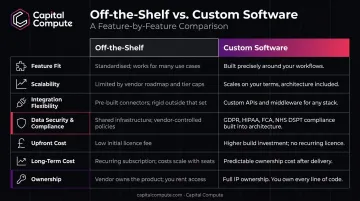
Gartner reports that enterprise SaaS costs typically rise 10–20% or more at renewal. Over a 2–3 year horizon, total licensing fees, integration plugins, and manual workaround labour typically exceed the cost of a custom build, and that gap widens once compliance remediation costs are included.
When Startups and SMBs Outgrow Off-the-Shelf Tools
The Operational Trigger
The first sign is usually invisible: someone creates a workaround. A spreadsheet export between systems. A manual step that "only takes 10 minutes." A Zapier automation that breaks every few weeks. These workarounds compound. What starts as one person's Monday morning task becomes a process dependency the business can't easily unpick.
Common operational triggers include:
- Exporting data manually between disconnected tools to produce a single report
- Licensing costs that scale with headcount faster than revenue
- An inability to add new processes without buying another SaaS product
- Integration plugins that require ongoing maintenance and break with vendor updates
The Compliance Trigger
For Australian businesses in legal, finance, or healthcare, the compliance trigger is harder to ignore. Generic SaaS tools often cannot satisfy the Privacy Act data residency requirements, granular access controls, or immutable audit trail obligations.
The cost of getting this wrong is documented. The Federal Court ordered Australian Clinical Labs to pay A$5.8 million in civil penalties over the Medlab data breach — citing serious failures in data security and governance.
That penalty reflects what happens when security and compliance architecture is treated as a configuration problem rather than a design requirement.
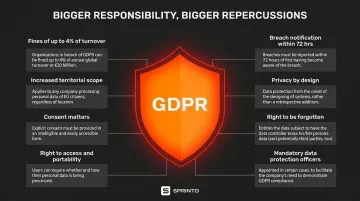
When compliance becomes a board-level concern, off-the-shelf tools stop being a cost saving and start being a liability.
The Competitive Trigger
The third trigger is strategic. When your product or service experience is constrained by what a third-party vendor chose to build, you have handed part of your competitive differentiation to someone who doesn't share your priorities.
A concrete example: an Australian legal tech firm that wants to differentiate its client portal cannot do so if that portal runs on a generic SaaS interface. The vendor's roadmap determines what's possible, not the firm's own product strategy. Custom software removes that constraint.
Key Types of Custom Enterprise Software
Different business bottlenecks call for different solutions. The most common types commissioned by Australian startups and SMBs:
- Custom CRM systems — managing sales pipelines and client relationships in ways generic CRMs won't support, with compliance built into the data model from the start
- Custom SaaS platforms — startups building their own product rather than licensing someone else's; multi-tenant architecture, billing logic, and scalability requirements are scoped in sprint one
- ERP integrations — connecting finance, HR, and operations into a single source of truth; particularly valuable for manufacturers and logistics businesses running legacy systems alongside modern tools
- AI agents — automating workflows in legal, finance, and marketing; production AI agents are now viable for SMBs, not just large enterprises
Integration and API Middleware
Many SMBs don't need to replace all their tools. They need a custom integration layer that makes existing tools communicate reliably and securely.
This is often the most cost-effective entry point into custom development. Capital Compute has delivered integration middleware as standalone fixed-price engagements. One recent example: a custom middleware layer connecting legacy production systems to an ERP saved 18 hours weekly and improved operational efficiency by 15%. The APIs are documented and versioned so the client's internal team can extend them independently after handover.
Legacy Modernisation
Established SMBs running outdated internal systems face a specific challenge: replacing those systems without disrupting live operations. The answer is an incremental approach — wrapping or replacing components progressively rather than a single high-risk migration event. Operational continuity is a core delivery requirement across every legacy modernisation engagement, not a consideration raised at go-live.
The Custom Enterprise Software Development Process
Discovery and Scoping
This is where architecture decisions are made and scope is locked. A legitimate discovery phase produces concrete outputs before any build commitment is made:
- A requirements document
- A data model
- An integration map
- A phased delivery roadmap with a fixed-price estimate
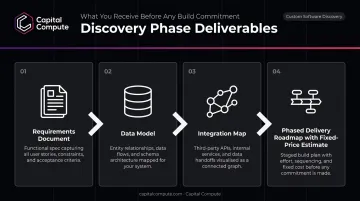
At Capital Compute, a fixed-price estimate is delivered within 2 business days of the discovery call. The Privacy Act data architecture is scoped in Week 1 — including lawful basis mapping, access controls, audit logging, and data residency decisions — before application-layer development begins.
Be cautious of partners who defer architecture decisions until after the first scale event, or who provide a fixed price in a 30-minute introductory call before requirements are understood. As Capital Compute's documentation notes plainly: a fixed price given in a 30-minute intro call is not an estimate — it's a number designed to get you to sign.
Sprint-Based Delivery
The build runs on fortnightly sprints, each ending with a working increment the client can review and approve before the next sprint begins. This matters for SMBs :
- Budget exposure is limited to one sprint at a time
- Requirements can be refined based on real feedback, not upfront assumptions
- Problems are caught within a sprint cycle, not after months of accumulated work
Sprint reviews at Capital Compute are delivered in Australian business hours. Clients see working software at each review — not status updates or slide decks.
The Privacy Act Compliance as Architecture, Not Afterthought
OAIC guidance on privacy by design under the Australian Privacy Principles is unambiguous: appropriate technical and organisational measures must be integrated from the design stage, not added later.
The decisions made at discovery propagate through every layer of the system:
- Data classification — determines what is stored, where, and for how long
- Role-based access controls — enforced at architecture level, not application level
- Audit logging — immutable records required for regulatory accountability
- Data residency — Australia/EU hosting decisions locked before development begins
Retrofitting the Privacy Act controls after launch requires dismantling and rebuilding core components — not adjusting configuration files. The cost difference between building compliance in versus bolting it on is measurable; the OAIC's enforcement record on inadequate technical measures makes the regulatory exposure concrete.
Handover and Post-Launch
Dependency on a single vendor after go-live is a risk, not a given. Every Capital Compute handover is structured to leave the client's team fully self-sufficient:
- Documented, versioned APIs the client's internal team or a future partner can extend
- A codebase written for long-term readability, not just initial delivery
- CI/CD pipelines and deployment documentation transferred at handover
- Full IP ownership from day one — no seat fees, no lock-in
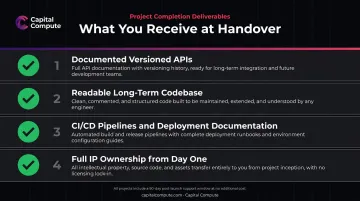
Capital Compute includes a 90-day post-launch support window as standard, with month-to-month retainer support available beyond that — no long-term commitment required.
Cost, Risk, and Choosing the Right Partner
What Drives Cost
Custom enterprise software cost is driven by:
- Project scope and complexity — the number of integrations, user roles, and business functions involved
- Engineering seniority — senior engineers who make architecture decisions cost more than generalists; they also prevent the expensive rework that generalists create
- Compliance requirements — regulated sector builds (legal, finance, healthcare) require additional scoping, testing, and documentation
- Technology stack — cloud infrastructure, AI components, and real-time data requirements each add cost
No credible independent benchmark for SMB-scale Australian projects exists in the public domain. Any agency publishing precise ranges without a discovery process is padding estimates or planning to recover margin through change requests.
Fixed-Price vs. Time-and-Materials
Australian Government Commercial Function guidance is clear: cost-plus (time-and-materials) arrangements leave buyers with greater budget uncertainty and give suppliers less incentive to control cost. Fixed-price models transfer financial risk to the supplier — provided the specification is sufficiently detailed before pricing is locked.
For SMBs without large engineering budgets, the choice is straightforward. Fixed-price with milestone gates limits budget exposure, aligns incentives, and ties payments to verified deliverables. Time-and-materials means every hour of rework — including rework caused by the supplier's mistakes — appears on your invoice.
Red Flags When Vetting Partners
Ask these questions in a first conversation:
| Question | Red Flag Answer |
|---|---|
| Are all engineers internal? | "We work with a trusted network of contractors" |
| Is pricing fixed, and who absorbs defect costs? | "We bill hourly; rework is assessed case by case" |
| What documentation do we receive before build begins? | "We'll document everything at handover" |
| Can we work with another team after launch? | Evasion, or contracts that retain credentials |
Each of these questions has a clear answer when working with Capital Compute. The model is built around internal engineers only, fixed-price delivery with milestone approval gates, the Privacy Act architecture scoped at discovery, and full codebase ownership transferred at handover.
For Australian businesses in legal, finance, or marketing, the team has shipped production AI agents and compliance-aware systems in those sectors. The relevant credential is demonstrated sector experience, not generic software delivery claims.
Frequently Asked Questions
What is custom enterprise software development?
Custom enterprise software development is the process of building software tailored to a specific business's workflows, integrations, and compliance requirements. Unlike off-the-shelf tools built for a generic audience, custom software is architected around how your business actually operates, including regulated data handling obligations that generic platforms rarely satisfy.
How much does custom enterprise software development cost?
Costs vary based on scope, complexity, team seniority, and compliance requirements. SMB-scale projects range widely depending on these factors — a scoping engagement is a lower-risk starting point than committing to a full build without defined requirements. Fixed-price scoping with milestone-based approval gates limits budget exposure regardless of project size.
What are the major types of enterprise applications?
The main categories are ERP systems, custom CRM platforms, SaaS products, AI-powered workflow tools, business intelligence platforms, and integration or API middleware. The right choice depends on which business function is the current bottleneck — for many SMBs, a custom integration layer is the most cost-effective first step.
What is an enterprise software developer?
An enterprise software developer designs, builds, and maintains complex business software systems. The critical distinction is seniority: a senior engineer determines data structure, API design, security model, and scalability approach from sprint one. For businesses with compliance requirements, that seniority is not optional.
Can startups and SMBs afford custom enterprise software?
Custom software becomes affordable when evaluated against licensing fees, integration plugins, manual workaround labour, and compliance gaps over two to three years. Sprint-based, milestone-gated delivery means SMBs manage budget exposure incrementally rather than committing a large upfront sum before requirements are defined.
How long does custom enterprise software development take?
Timelines depend on scope. A well-structured discovery phase typically runs two to four weeks and produces a requirements document, data model, and phased roadmap. Full delivery for an SMB-scale project typically ranges from three to nine months depending on complexity. Agile sprint delivery gives clients visibility and control at every two-week interval throughout.