A fragile automation system that breaks in production, a Privacy Act exposure created by an agency that treated data compliance as a go-live checkbox, or a vendor who built your systems on proprietary tooling they alone can maintain — these are real outcomes, not edge cases. Industry analysis has warned that a significant share of generative AI projects are abandoned after proof of concept due to poor data quality, unclear business value, and inadequate risk controls.
This guide gives Australian businesses — particularly those in regulated sectors — a practical framework for evaluating AI automation agencies before signing anything.
Key Takeaways
- An AI automation agency builds and deploys AI-powered systems inside your business — not a tool reseller or off-the-shelf software vendor
- Demand a written scope document before any build begins — verbal agreements create serious delivery risk
- Delivery model, the Privacy Act posture, and post-handover independence are the three highest-stakes selection criteria
- Red flags: guaranteed ROI without a measurement plan, vague data handling answers, and resistance to defining acceptance criteria upfront
- In regulated sectors, compliance architecture must be defined at discovery, not checked before launch
What Is an AI Automation Agency?
An AI automation agency is a specialist firm that studies your business processes, identifies where AI can eliminate repetitive or time-consuming work, builds the systems that do it, and hands them over in a form your team can actually operate. That's distinct from a general software agency (which builds to spec without process expertise) and from a tool reseller (which sells licences, not outcomes).
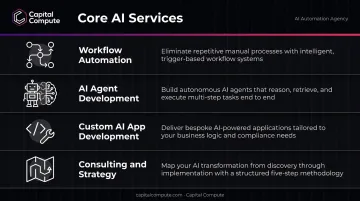
Core Services These Agencies Typically Offer
| Service | What It Covers |
|---|---|
| Workflow automation | Connecting existing tools to eliminate manual steps between systems |
| AI agent development | Autonomous systems handling multi-step tasks — lead qualification, document processing, research |
| Custom AI app development | Purpose-built solutions for problems off-the-shelf tools cannot solve |
| Consulting and strategy | Process mapping, data readiness assessment, and roadmap work before any build begins |
RPA vs. AI automation is a distinction that matters before you evaluate any agency. As IBM describes, robotic process automation handles rule-based, repetitive digital tasks — data entry, form completion, file movement. AI automation handles tasks requiring language understanding, reasoning, or decision-making. Most modern engagements combine both, but they're not interchangeable, and an agency that conflates them in their pitch is worth scrutinising.
Why Australian Businesses in Regulated Sectors Are Prioritising This
The global intelligent process automation market was valued at USD $14.6 billion in 2024 and is projected to reach USD $44.7 billion by 2030. That figure includes RPA and non-agency components, but it captures the demand context accurately.
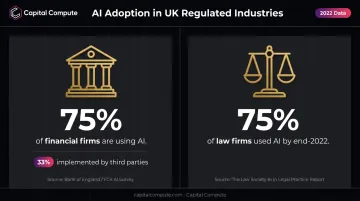
In Australian finance specifically, ASIC's REP 798 review of 23 AFS and credit licensees found widespread use of AI in decision-making — yet nearly half had no policies addressing consumer fairness or bias. Legal is similar: LexisNexis reported that more than 50% of Australian legal practitioners have trialled generative AI tools.
Document-heavy, compliance-sensitive, manually intensive workflows are exactly where AI automation delivers the most. They're also where a poorly scoped build causes the most damage.
What to Consider When Choosing an AI Automation Agency
With hundreds of agencies now positioning themselves as AI automation specialists, surface-level credentials — a polished website, a case study PDF, a client logo grid — rarely reflect delivery capability. Each criterion below connects to a specific risk that only surfaces after you've signed.
Discovery and Scoping Process
The discovery phase predicts everything that follows. An agency that cannot clearly map your existing processes, identify edge cases, and document acceptance criteria before writing a line of code will almost certainly deliver a system that breaks under real conditions.
One straightforward check: does the agency produce a written scope of work — with defined deliverables, integration points, timelines, and success metrics — before asking you to sign a build budget? If the answer is no, or if the scope is described as "flexible" without fortnightly sprint reviews, treat that as a structural risk indicator.
Delivery Model: Internal Team vs. Subcontracting
Many agencies subcontract the actual build to third-party developers. The engineers who scoped your project are not the ones building it, and the agency you briefed may not be the team you're working with. Accountability gaps created here typically surface after go-live, when something breaks and nobody owns the context.
Ask directly: Who builds the system? Are those same engineers available on the retainer after go-live? If the answer is vague, the institutional knowledge about your systems walks out the door with the contractor.
The Privacy Act and Data Security Posture
For Australian businesses in legal, finance, and healthcare, data handling is not optional due diligence. Under the Privacy Act and the updated automated decision-making provisions in Articles 22A-22D (amended via the Data (Use and Access) Act 2025), the OAIC is explicit: procuring AI does not remove the controller's accountability.
Where an agency is acting as a data handler on your behalf, the Privacy Act 1988 and the Australian Privacy Principles support the need for a written contract specifying data types, access controls, subprocessor authorisation, breach notification, and audit rights.
Two questions to ask any agency before proceeding:
- How is data stored and encrypted during and after the build?
- Is Privacy Act compliance scoped at discovery, or reviewed before go-live?
The second question matters more. An agency that treats compliance as a pre-launch checklist may have been processing, storing, or transmitting personal data in a non-compliant architecture throughout the entire development period, creating retrospective liability before you've launched a single workflow.
Proof of Verifiable Outcomes
Case studies on an agency's own website are a starting point, not evidence. Look for specifics: what process was automated, what the baseline metric was, what changed, and over what time period. Vague claims about "efficiency gains" without a defined measurement methodology are a yellow flag.
Supplement agency-provided materials with reviews on third-party platforms (Clutch, Google, Trustpilot) and, where possible, direct references from clients in your sector. The context of a legal automation project is materially different from an e-commerce chatbot build. An agency with strong retail credentials is not automatically qualified to build inside an ASIC-regulated environment.
Pricing Model and Contract Terms
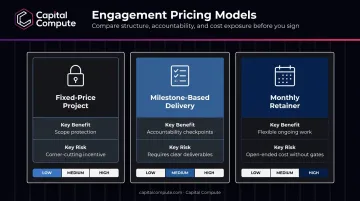
The three main engagement structures each carry a different risk profile:
- Fixed-price project — protects against scope creep if the specification is solid; the risk is that a poorly scoped fixed price creates incentives to cut corners
- Milestone-based delivery — provides accountability checkpoints; works well when deliverables are clearly defined per milestone
- Monthly retainer — appropriate for ongoing work, but open-ended retainers without milestone approval gates can accumulate cost without accountability
Vendor lock-in is a concrete financial risk that doesn't appear on proposal documents. Some agencies architect systems that can only be maintained by the agency itself, or retain IP over templates and custom tooling. Before signing, clarify: who owns the code, who owns the data architecture, and what happens to your systems if you end the engagement early.
Post-Project Handover and Documentation
When a complex automation project ends, the agency walks away carrying months of accumulated understanding about your systems and business logic. If that knowledge isn't captured in versioned APIs, written runbooks, and training materials, your internal team starts from zero the next time anything needs changing.
A practical measure of handover quality: can your internal team monitor, adjust, and maintain the system without returning to the agency? If not, you've paid for a build that requires ongoing external access to function — which changes the long-term cost model entirely. Capital Compute, for instance, documents versioned APIs and runbooks as a standard deliverable, so clients retain full operational control after project close.
Red Flags When Evaluating AI Automation Agencies
Some warning signs are worth treating as hard stops rather than negotiating points:
Guaranteed ROI figures without a measurement plan — any agency promising a specific percentage improvement without defining the baseline metric, tracking methodology, and review cadence cannot reliably deliver on that claim. Ask for defined success criteria before signing anything.
Vague or evasive data security answers — if they cannot explain how your data is stored, who can access it, and how it is protected post-build, do not hand them live business or customer data — particularly in regulated sectors.
Resistance to defining acceptance criteria upfront — agencies that describe their process as "agile" as a reason not to define scope often deliver systems that expand in cost without expanding in value. That is a scoping evasion, not a methodology choice.
No clear answer on subcontracting — if you cannot get a direct answer to "who actually builds this," assume the answer is a network of contractors with no accountability to you.
How Capital Compute Can Help
Capital Compute is an Australian-based software development and AI solutions company that has shipped production AI agents in legal, finance, and marketing sectors. For regulated-sector clients evaluating AI automation partners, that track record is material — this is a company built around AI delivery, not one that rebranded after 2023.
Several of the selection criteria covered in this guide are directly addressed by how Capital Compute structures its engagements:
- No subcontracting — the engineers who scope the project build it, and the same team stays on the retainer after go-live
- APP-compliant data architecture, access controls, and compliance requirements documented before development begins — not reviewed at launch
- Senior engineers define the system's technical foundations in sprint one, before the first scale event forces a revisit
Those structural decisions translate into predictable commercial terms for buyers evaluating cost and control:
- Fixed-price scope with fortnightly sprint reviews and client approval gates at every milestone — no open-ended billing
- Documented, versioned APIs built for maintenance by the client's internal team — no dependency on Capital Compute after project close
- Month-to-month retainer with no lock-in and no knowledge transfer overhead
- Sprint reviews scheduled in Australian business hours, so regulated-sector clients can join calls without coordinating across time zones

Conclusion
Choosing the right AI automation agency comes down to four things that no pitch deck can fake:
- Clearly defined scope before billing begins
- Data protection built into the architecture from day one
- Accountability at every milestone, not just at go-live
- A handover that leaves your team genuinely self-sufficient
AI automation is not a one-time implementation. Business processes evolve, AI models are updated, and integrations break. The systems an agency builds — and the relationship you maintain with them — should be evaluated against real operational performance over time, not just at go-live. Build that expectation into your selection criteria from the start.
Frequently Asked Questions
What is an AI automation agency?
An AI automation agency designs, builds, and deploys AI-powered systems inside a business — automating workflows, connecting existing tools, and building custom AI applications. It's distinct from a general software firm (which builds to specification) and from a tool reseller (which sells licences rather than outcomes).
How much does an AI automation agency cost?
Costs vary significantly by scope. Australian benchmarks range from around A$15,000 for a proof of concept to A$400,000+ for enterprise-grade AI development. Key cost drivers include data complexity, integration requirements, and ongoing support. Australian engagements are commonly structured as fixed-price projects or monthly retainers.
What services do AI automation agencies typically offer?
The main categories are workflow automation, AI agent development, custom AI application development, and consulting or strategy work. The mix varies by agency — some specialise in specific sectors or tooling stacks, so verify that their specialisation matches your industry before signing.
How do I know if my business is ready for AI automation?
Businesses are typically ready when they have clearly defined, repeatable processes consuming significant team time and generating consistent, structured data. Agencies that skip process mapping and automate poorly-defined workflows tend to amplify existing problems rather than solve them.
What are the biggest red flags when evaluating an AI automation agency?
The three main red flags: guaranteed ROI without a defined measurement plan, inability to clearly explain data handling and security, and resistance to defining scope and acceptance criteria before billing begins. Any one of these warrants serious scrutiny.
How long does an AI automation project typically take?
Simple workflow automations can go live in a matter of weeks. Custom AI applications or multi-system integrations typically take 4–12 weeks. Integration complexity, data readiness, and stakeholder decision speed drive timelines — not the build itself.