01
STAGE 1
Discovery
Agree the use case, real cases, data boundaries and evaluation set.
AI for B2B operations, built around evaluation, predictable failure behaviour and client data governance.
Capital Compute builds AI into B2B products and operations for UK companies. Our B2B AI development approach focuses on evaluation, failure behaviour, data governance and workflow integration rather than treating the model as the whole solution.
A B2B system that is confidently wrong in front of a client can cost more than one that is occasionally slow. We define how the system is measured, what happens when it is uncertain and which data boundaries it must respect before the feature reaches a user.


Capital Compute provides B2B AI software services for operational workflows, customer-facing products and decision-support systems where measurable evaluation and controlled failure behaviour matter.
Service
Internal process automation
What it covers
Multi-step operational work with approved tool access, including triage, extraction, routing and reconciliation.
Service
Document and data extraction
What it covers
Turning contracts, invoices, forms and reports into structured, checkable data.
Service
Client-facing assistants
What it covers
Conversational products used directly by customers, with retrieval and escalation paths designed into the workflow.
Service
Decision support
What it covers
Surfacing relevant information and its provenance to a person making a judgement.
Service
Evaluation and guardrail infrastructure
What it covers
The evaluation harness used to measure output quality and detect whether a system is improving or getting worse.
The difference between consumer AI and B2B AI is not simply technical sophistication. It is the cost of being wrong, who sees the output and who is accountable when the system fails.
Consumer AI
B2B AI
Consumer AI Cost of a wrong answer — Consumer AI
A poor experience. The user retries or leaves.
B2B AI Cost of a wrong answer — B2B AI
A wrong invoice, a missed obligation or a client decision made on bad information. Someone is accountable.
Consumer AI Who sees the output — Consumer AI
The person who asked.
B2B AI Who sees the output — B2B AI
Often a third party, such as your client, their auditor or a regulator.
Consumer AI Tolerance for variance — Consumer AI
Different answers to the same question may be acceptable.
B2B AI Tolerance for variance — B2B AI
The same input should produce the same output. Any variance must be bounded and explainable.
Consumer AI Data involved — Consumer AI
Usually the user's own.
B2B AI Data involved — B2B AI
Usually client data held under contract, with obligations attached.
Consumer AI What done means — Consumer AI
It feels good in a demo.
B2B AI What done means — B2B AI
It passes an evaluation set agreed before the build and behaves predictably when it fails.
Our B2B AI software agency approach connects each solution to a defined engineering requirement so that AI is not treated as an isolated feature or demonstration.
Engineering requirement: Bound what the system may act on, and make each action reversible and logged.
Engineering requirement: Use confidence scoring and a review path so structured output can be checked.
Engineering requirement: Measure retrieval quality and define when the system stops and hands over to a person.
Engineering requirement: Show provenance so the accountable person can see why the system produced its answer.
Engineering requirement: Run agreed real cases against every change before release and after launch.
AI does not create a separate legal regime in the UK. Existing obligations continue to apply to systems that use AI.
Obligation
UK GDPR guidance on AI
What it means in a build
Address lawful basis, fairness and transparency where personal data is processed.
Obligation
Automated decision-making rights
What it means in a build
Where automated decisions have legal or similarly significant effects, design meaningful human involvement into the system.
Obligation
Secure AI development
What it means in a build
Use the NCSC Guidelines for Secure AI System Development as a baseline.
Obligation
LLM application security
What it means in a build
Address prompt injection, insecure output handling and data leakage.
Why choose us
Architecture is decided by people who will maintain the result.
In B2B work, information is often held under contract on behalf of a client. That constrains what may be sent to a third-party model, what may be retained and what may be used for improvement. We settle those boundaries in discovery because finding them after integration can require the data path to be rebuilt.
We build the evaluation before the feature. An agreed evaluation set turns a subjective view of quality into a score that can go up or down.
Agree the evaluation set during discovery, using real cases and the awkward cases people currently escalate.
Define an acceptable answer for each case type with your subject matter expert.
Build a harness that runs the set so each change is scored rather than judged from a demonstration.
Set the threshold that must be met before an output reaches a user, and define the behaviour when it is not met.
Keep the evaluation running after launch to detect model and data drift.
Tech stack
 JavaScript
  TypeScript
  React
React  Angular
  Vue
Vue  Next.js
  Astro
Astro  Node.js
React Native
Node.js
React Native
 Swift
Swift  Kotlin
  Flutter
  Ionic
Ionic  Electron
  Tauri
Tauri  PostgreSQL
  MySQL
MySQL  MongoDB
  Analytics BI
  Claude
  Python
  Vector Search
  Automation
 Custom content generation engines, automated asset taggers, campaign performance predictors, and CRM-linked personalisation tools that process client data securely without training public models.
HIPAA and GDPR-compliant clinical summary generators, patient portal assistants, and medical literature search engines built with strict data isolation and clinical verification steps.
Automated match commentary generation, player stats analysis, content summarization for OTT platforms, and personalized fan interaction tools that handle high peak concurrent traffic.
Contract review automation, AI-assisted litigation research, document semantic search, and clause generators built with strict confidentiality and verification workflows.
Secure document search, automated report generation, audit trail logging, and customer support RAG bots designed around strict regulatory compliance and audit logs.
Automated maintenance manual search, supplier query processors, and operational log analytics engines that interface with legacy ERP and factory database systems.
Delivery address parsers, customer query routing tools, and automated shipper update systems that connect directly with transport management databases and carrier APIs.
AI product descriptions at scale, conversational product advisors, search engine optimization generators, and support chatbots integrated with real-time inventory systems.

Capital Compute uses internal engineers only. The engineers involved in discovery are the engineers who ship, and clients have direct contact with them rather than an account manager.
From discovery to launch
Agree the use case, real cases, data boundaries and evaluation set.
Write domain rule files for the technology stack and business domain.
Develop with the evaluation harness in place from the first sprint.
Test the feature and its failure behaviour, including what happens when confidence is low.
Keep evaluation running after launch. Provide 90 days of post-launch support and fix defects in Capital Compute's code at no development charge.
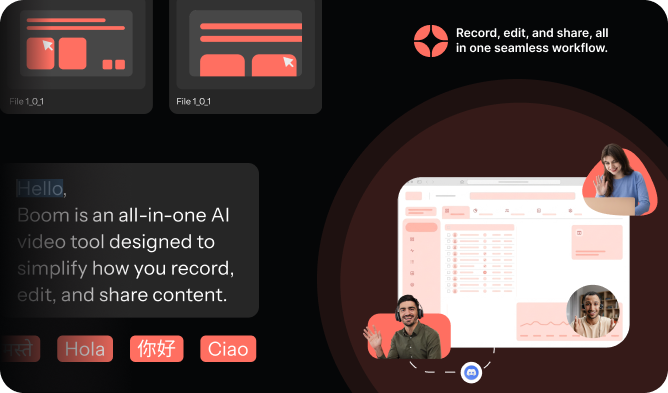
BoomShare.ai is a publicly approved Capital Compute case study. It reports three platforms delivered in ten weeks and a conversion improvement of more than 50%.
View the BoomShare case study →
Developer + Basic AI workflow

Developer + Part time Technical Architect + Basic AI Workflow

Developer + Part time Technical Architect + Advanced AI Workflow
Client testimonials
I was looking for frontend tech resources for my products - TweeFeed and ContentFeed - for a long time. I tried different freelancers, Upwork, hired in-house but kept having bug issues. Birju and his team saved me...

Google Review (5 stars)
This company cares about the client. Most messages I get are about how they can help improve the product so it sells more. This deep concern about the success of the client's product, I would say, sets them apart.
.png)
Director, AK Systems Inc.
I have never had difficulty explaining any idea to any developer in Capital Compute. They pick things up fast and I generally have no time explaining again, so this setting works perfectly for me. They usually reach out by email with additional questions...

Founder, Mediapay
Bring the cases your current process escalates to a person and the data boundary you are least comfortable crossing. The engineers who would run the engagement will work on both for one week.
By the end of the trial sprint, you will have: