01
STAGE 1
Discovery call
Review the problem, current systems, available data and constraints.
What you get
A written scope summary and the risks already identified.
Production generative AI needs more than a model and a prompt
Capital Compute provides generative AI development services UK businesses can use to build production software around their own information and workflows. This includes retrieval over business documents, document and form processing, drafting and summarisation, classification and routing, and language capability embedded in existing products.
A working demonstration can be quick to create. Production LLM application development must also be accurate enough for the use case, responsive enough for the workflow, cost-controlled and governed against the way your business will use it.


Service
Retrieval over your own content
What it is designed to change
RAG development UK for grounding answers in approved business knowledge with links back to the source.
Service
Document and form processing
What it is designed to change
Turn unstructured paperwork into structured data without repeated manual keying.
Service
Drafting and summarisation
What it is designed to change
Create first drafts and summaries inside an existing workflow for review by a person.
Service
Classification and routing
What it is designed to change
Sort incoming work and send it to the appropriate person or process.
Service
Generative features inside products
What it is designed to change
Embed language capability into an existing application rather than operate it as a separate tool.
Service
Evaluation and guardrail layers
What it is designed to change
Test expected behaviour and define what the system should do when it is uncertain or outside scope.
A prototype may contain only a model and a prompt. Production delivery adds retrieval, permissions, evaluation, guardrails, cost and latency controls, and monitoring so the capability can operate inside a real business process.
Production layer
Retrieval and permissions
Why it is needed
Ground responses in approved information and respect who is allowed to access it.
Production layer
Evaluation
Why it is needed
Test the system against agreed examples and business criteria before release.
Production layer
Guardrails
Why it is needed
Define scope boundaries, refusal behaviour and escalation paths.
Production layer
Cost control
Why it is needed
Select the right model for each task, reuse work where appropriate and control context size.
Production layer
Latency control
Why it is needed
Keep response time suitable for the workflow rather than treating speed as an afterthought.
Production layer
Monitoring
Why it is needed
Identify drift and unexpected behaviour after launch.
Intended outcome: Staff can find relevant information in approved company content.
Intended outcome: Fields can be captured from forms and documents for downstream processing.
Intended outcome: A person receives a first draft or summary inside the process where it is needed.
Intended outcome: Requests can be classified and directed to the right queue or person.
Intended outcome: Users can access generative capability within an existing application.
RAG development UK connects a generative model to approved business information so responses are grounded in source material rather than model memory alone.
Risk: Confident but incorrect answers
Control included in the design: Ground responses in retrieved content and provide source citations.
Risk: Questions outside the system's remit
Control included in the design: Set scope boundaries and a refusal or escalation path.
Risk: Prompt injection
Control included in the design: Separate privileges and handle inputs in line with secure AI development guidance.
Risk: Silent behaviour drift
Control included in the design: Use evaluation suites and monitoring after release.
Risk: Exposure of restricted information
Control included in the design: Enforce permissions at the retrieval and data layer.
The production design can use different models for different tasks, cache or reuse suitable results, and limit the context sent with each request. This supports enterprise generative AI workloads while keeping the model layer replaceable so the wider system does not need rebuilding when requirements or model capability change.
Expected model usage cost and the response-time requirement are set during scoping for the intended workload.
The architecture separates the model layer from retrieval, permissions, application logic, evaluation and monitoring. This keeps LLM application development adaptable without presenting a particular provider as the default choice.
Proprietary and open-source models selected per use case, including models hosted inside your own environment where confidentiality or data residency requires it.
Retrieval, tool use and multi-step workflows assembled as maintainable application code rather than a chain of fragile prompt templates.
Indexing, chunking and semantic search tuned for accurate retrieval-augmented generation over your own document estate.
Deployed natively inside your existing security perimeter, with UK and EU hosting available where data residency is a requirement.
The underlying engineering remains consistent, but the application of generative AI solutions in UK shifts dramatically by industry. Click any sector to view its typical applications.
Extracting clauses from dense regulatory text and automating initial compliance checks, with permission-aware retrieval, audit logging and a defined escalation path wherever a decision carries regulatory weight.
Comparing draft contracts against standard playbooks and summarising lengthy case files, built with strict confidentiality boundaries and human verification on anything that leaves the firm.
Structuring patient intake forms and anonymising clinical data pipelines, designed around UK GDPR and clinical safety review rather than retrofitted to them.
Dynamic product description generation and semantic search that actually understands buyer intent, integrated with live inventory rather than a separate catalogue copy.
Content generation engines, automated asset tagging and CRM-linked personalisation that process client data inside your boundary without training public models.
Maintenance manual search, supplier query processing and operational log analysis that interface with legacy ERP and factory database systems.
Delivery address parsing, customer query routing and automated shipper updates that connect directly to transport management databases and carrier APIs.
Automated match commentary, player statistics analysis and content summarisation for OTT platforms, engineered for high peak concurrent traffic.
Consideration
UK GDPR applied to AI
How it affects the build
Define lawful basis, data minimisation and transparency for personal data.
Reference
ICO AI and data protection guidanceConsideration
Secure AI development
How it affects the build
Address prompt injection, data poisoning and supply-chain risks during design.
Consideration
EU AI Act
How it affects the build
Assess applicability if the system is placed on the EU market.
Reference
EU AI ActConsideration
Regulatory enforcement
How it affects the build
Treat data handling as a production control, not a post-launch document exercise.
Reference
ICO enforcement publications
Capital Compute does not subcontract delivery. The engineers involved in discovery continue through development, deployment and post-launch support.
From discovery to launch
Review the problem, current systems, available data and constraints.
What you get
A written scope summary and the risks already identified.
Choose the approach and architecture before estimating.
What you get
A scope-locked fixed-price estimate and sprint plan within 2 business days.
Engineers work a real backlog item for one week at no charge.
What you get
Working code and a sprint review before a wider commitment.
Develop in focused sprints with continuous feedback.
What you get
A working increment and demonstration each sprint.
Test function, performance, security, accessibility and AI behaviour against an evaluation suite.
What you get
Test evidence and a release plan with rollback.
Keep the same engineering team available for 90 days.
What you get
Defects in Capital Compute's code fixed at no development charge.
Why choose us
Around half of active client engagements use agreed sprint objectives, with invoices issued after those outcomes are delivered.
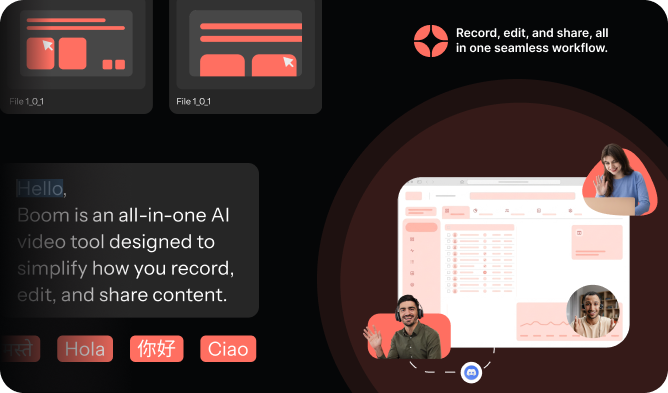
BoomShare.ai is a publicly approved Capital Compute case study. It reports three platforms delivered in ten weeks and a conversion improvement of more than 50%.
View the BoomShare case study →
A one-week engagement against a real backlog item, provided before a wider commitment.

A scope-locked estimate and sprint plan provided within 2 business days after discovery.

Used on around half of active client engagements, with sprint objectives agreed upfront and invoices issued after those outcomes are delivered.
Client testimonials
I was looking for frontend tech resources for my products - TweeFeed and ContentFeed - for a long time. I tried different freelancers, Upwork, hired in-house but kept having bug issues. Birju and his team saved me...

Google Review (5 stars)
This company cares about the client. Most messages I get are about how they can help improve the product so it sells more. This deep concern about the success of the client's product, I would say, sets them apart.
.png)
Director, AK Systems Inc.
I have never had difficulty explaining any idea to any developer in Capital Compute. They pick things up fast and I generally have no time explaining again, so this setting works perfectly for me. They usually reach out by email with additional questions...

Founder, Mediapay
Start with the workflow, the information the system may use and the outcome that would make the work worthwhile. The discovery call produces a written scope summary and identifies the risks already visible.
If the use case is suitable, Capital Compute provides a scope-locked fixed-price estimate within 2 business days and can begin with a one-week free trial sprint against a real backlog item.