Technology and domain rules are stored as versioned Markdown files and injected into the model context. The model works within project-specific constraints instead of guessing at architecture, naming or security conventions.
AI Engineering Workflow
for UK Software Development
Faster software delivery needs governance, not another coding assistant
Capital Compute's AI engineering workflow turns AI-assisted development into a controlled software delivery system. Domain-specific Markdown rule files guide every build stage, a different model reviews AI-assisted pull requests, and project reasoning is captured as durable documentation. The result is less architectural drift, earlier defect detection and knowledge that stays with your product.
This approach gives UK software teams a structured AI software development process without giving up engineering accountability. You can inspect the workflow on your own backlog during a one-week free trial sprint before making a commercial commitment.


Code ownership from day one
Engineer-led architecture, no subcontracting
Fixed-price estimate in 2 business days, scope-locked
One-week free trial sprint against your real backlog
90-day post-launch support, our defects fixed free
Code ownership from day one
Engineer-led architecture, no subcontracting
Fixed-price estimate in 2 business days, scope-locked
One-week free trial sprint against your real backlog
90-day post-launch support, our defects fixed free
Code ownership from day one
Engineer-led architecture, no subcontracting
Fixed-price estimate in 2 business days, scope-locked
One-week free trial sprint against your real backlog
90-day post-launch support, our defects fixed free
Code ownership from day one
Engineer-led architecture, no subcontracting
Fixed-price estimate in 2 business days, scope-locked
One-week free trial sprint against your real backlog
90-day post-launch support, our defects fixed free
Services
What the AI Engineering Workflow Controls
An AI coding tool can produce output quickly. The engineering workflow determines whether that output remains consistent, reviewable and maintainable after the demo. These six controls apply across discovery, development, review and handover, creating a repeatable AI software development process for UK product teams.
Each task receives the code, rules and acceptance criteria it needs, rather than an uncontrolled dump of the repository. Tighter context reduces irrelevant output and makes review more focused.
AI-assisted pull requests receive a separate model review before human approval. The reviewing model did not produce the code, which gives the team an independent challenge to assumptions and edge cases.
AI output never bypasses accountable engineering review. People remain responsible for architecture, business rules, security decisions and the final merge.
Decisions, rejected options, pitfalls and domain context are documented while the work happens. A new engineer can understand why the system was built a certain way without reconstructing old conversations.
Acceptance criteria, test results, review findings and sprint outputs create an inspectable record. Buyers can evaluate delivered outcomes rather than paying for an unobservable number of hours.
The production gap
Why Ungoverned AI Assistance Creates Rework
The risk is not that AI produces nothing. It is that useful-looking code arrives faster than the team can see inconsistent assumptions, missing rationale and duplicated patterns. Those defects often surface after several features depend on them.
Tool-only risk
Workflow control
Buyer outcome
Tool-only risk
Every developer prompts differently
Workflow control
Shared versioned rule files
Buyer outcome
More consistent architecture across the codebase
Tool-only risk
Writer and reviewer share the same assumptions
Workflow control
Independent cross-model review
Buyer outcome
A second challenge before human approval
Tool-only risk
Decisions disappear inside chat history
Workflow control
Knowledge captured with the code
Buyer outcome
Faster handovers and less repeated discovery
Tool-only risk
Speed is measured by output volume
Workflow control
Acceptance criteria and test evidence
Buyer outcome
Progress judged against usable sprint outcomes
What we build
Six Mechanisms Inside Our AI Software Development Process
Each mechanism exists to remove a specific source of waste. Together they turn individual use of AI tools into a repeatable delivery capability that a CTO, product owner or engineering lead can inspect.
Rule-led context
Models receive the architecture, domain and coding constraints that apply to the task.
Acceptance-led generation
The task begins with observable completion criteria, not an open-ended request for code.
Independent model review
A separate model challenges the generated change before it reaches human review.
Human accountability
An engineer owns the decision to merge, release or reject the work.
Automated documentation
Design reasoning and operational knowledge are captured while context is still fresh.
Outcome evidence
Sprint reviews show working increments, test results and unresolved risks.
Rule files
Domain Rule Files Keep Architecture Consistent
A model cannot follow standards it has not been given. Capital Compute maintains domain and technology rules as versioned Markdown files, then loads the relevant rules into the context for each task.
Rules encode decisions once
A rule can define tenancy boundaries for SaaS, state-management conventions for a front end, security constraints for payments or the shape of an approved API. Engineers update the source rule when a decision changes, so the next task receives the new standard.
Context stays relevant
The workflow selects only the rules and repository context needed for the change. This makes the model's output easier to inspect and avoids treating a large, inconsistent prompt as project governance.
Rules remain client assets
Project-specific rule files are versioned with the code and transfer with it. Your team can read, challenge and extend the operating knowledge that shaped the build.
Cross-model review
Cross-Model Review Challenges AI-Assisted Pull Requests
A model that reviews its own output can preserve the assumptions that created the defect. Capital Compute sends AI-assisted pull requests through a different model before the human review step, creating an independent challenge rather than a repetition.
Review layer
Primary question
Output
Review layer
Cross-model review
Primary question
What assumptions, edge cases or inconsistencies could the writing model have missed?
Output
Review findings linked to the change
Review layer
Human engineering review
Primary question
Does this implementation serve the product, architecture and business rules?
Output
Approve, request changes or reject
Review layer
Automated tests
Primary question
Does the changed behaviour meet the agreed acceptance criteria?
Output
Repeatable pass and failure evidence
The model review does not replace peer review or testing. It moves routine challenges earlier so engineers can concentrate on architecture, risk and product behaviour.
This layered approach aligns with the National Cyber Security Centre's guidance that security should be addressed across secure design, development, deployment, operation and maintenance, rather than added after release.
Knowledge capture
Knowledge Capture Prevents the Same Discovery Work Twice
Code explains what the system does. It rarely explains why an obvious option was rejected, which edge case caused a rule or what a new engineer must know before changing the module. The workflow captures that reasoning while it is available.
Knowledge captured
Where it helps
What the next engineer avoids
Knowledge captured
Architecture decisions and trade-offs
Where it helps
Design reviews and future extensions
What the next engineer avoids
Reopening a settled decision without its original context
Knowledge captured
Known pitfalls and rejected paths
Where it helps
Maintenance and incident response
What the next engineer avoids
Repeating an experiment that already failed
Knowledge captured
Domain rules and terminology
Where it helps
Onboarding and feature discovery
What the next engineer avoids
Dependence on one senior engineer's memory
Knowledge captured
Operational and release notes
Where it helps
Deployment and support
What the next engineer avoids
Guessing how the system behaves in production
Technology layer
Technology Used in the AI Engineering Workflow
The workflow is designed to survive changes in individual products. Tool selection can change by client policy, repository, task and model capability. The controls around the tools remain consistent.
- 01
AI-assisted development
Drafting, refactoring, tests and repository-aware assistance within defined rules.
- Cursor
- Claude Code
- GitHub Copilot
- 02
Model layer
Generation and an independent review path where required.
- Task-appropriate proprietary or open-source models
- 03
Source control
Traceability, review gates and code ownership from the first commit.
- Git
- Pull-request workflows
- 04
Testing and CI
Repeatable evidence before merge and release.
- Project-specific automated test and build pipelines
- 05
Knowledge layer
Shared architecture, domain and operational context.
- Versioned Markdown rules
- Project documentation
- 06
Cloud deployment
Deployment within the agreed security and UK or EU data-residency boundary.
- AWS
- Microsoft Azure
- Google Cloud
Where it applies
Where the AI Engineering Workflow Adds Value Across UK Software Projects
The workflow is useful wherever a team needs speed without losing engineering control. The rules and evidence change by project, but the governance pattern remains the same.
Encode domain rules and acceptance criteria before features spread across the codebase.
Keep tenancy, permissions and subscription behaviour consistent across rapid releases.
Document old constraints as they are discovered and protect them during incremental replacement.
Apply shared API, accessibility and state-management rules across interfaces.
Build review, auditability and data-handling decisions into delivery from the start.
Give incoming engineers the same project rules, context and review gates as the core team.
Move quickly while preserving the decisions a second release will depend on.
Apply evaluation, guardrails and monitoring alongside normal software quality controls.
Compliance
AI-Assisted Engineering for UK Data and Security Expectations
The data boundary is agreed during scoping. Capital Compute identifies what code, prompts, documents and personal data may enter each tool, then selects the workflow and hosting pattern that fits the client's requirements.
Authority
What it requires from the build
Evidence to retain
Authority
ICO guidance on AI and data protection
What it requires from the build
Lawful, fair and transparent processing, risk assessment and appropriate technical and organisational measures where personal data is involved.
Evidence to retain
Data-flow decision, lawful basis, DPIA where required, retention and access controls
Authority
NCSC secure AI system development guidance
What it requires from the build
Security across design, development, deployment, operation and maintenance.
Evidence to retain
Threat decisions, dependency records, review findings, monitoring and update plan
Authority
UK Government AI Playbook
What it requires from the build
Meaningful human control, full-lifecycle management, secure use and the right tool for the job.
Evidence to retain
Named human approval points, lifecycle owner, evaluation criteria and operating policy
Authority
NIST AI RMF and Generative AI Profile
What it requires from the build
Govern, map, measure and manage AI risks in context.
Evidence to retain
Risk register, evaluation results, mitigations and review cadence
For UK personal-data use cases, follow the Information Commissioner's Office's AI and data protection guidance.
For secure engineering, use the NCSC's guidelines for secure AI system development.
For lifecycle governance and human control, refer to the AI Playbook for the UK Government.
For a cross-sector risk-management structure, map controls to the NIST AI Risk Management Framework.

Dedicated team
Your Dedicated AI-Assisted Engineering Team
Capital Compute assigns internal engineers who use the same rule, review and knowledge-capture system from discovery through launch. We do not subcontract the project, and the same team remains available during the 90-day post-launch support period.
- Engineer-led architecture with a named technical point of contact
- Direct communication and sprint evidence against agreed outcomes
- Cross-model review before accountable human approval
- Project rules and documentation transferred with your code
Let's scope your project
From discovery to launch
How We Apply the AI Engineering Workflow
01
STAGE 1
Discovery call
We identify the product goal, current systems, risk boundaries and the backlog item worth testing. You get a written scope summary and initial risk list.
02
STAGE 2
Scoping
We define architecture, acceptance criteria, data boundaries and applicable rule files. You get a scope-locked fixed-price estimate and sprint plan within 2 business days.
03
STAGE 3
Trial sprint
Our engineers run your real backlog through the workflow for one week at no development charge. You get working code, review evidence and a sprint review before commitment.
04
STAGE 4
Build
Focused sprints use rule-led context, cross-model review, human approval and continuous documentation. You get a working increment and evidence against the sprint outcome.
05
STAGE 5
Testing and launch
Functional, performance, security and accessibility testing precede release. You get test evidence, a release plan and a rollback approach.
06
STAGE 6
90-day support
The same engineering team stays available after launch. You get our defects fixed at no development charge during the support period.
Why choose us
Why UK Product Teams Choose Capital Compute
Sprints invoiced against agreed outcomes
Around half of current client engagements use outcome-based billing. Sprint objectives are agreed upfront and invoices follow delivered outcomes rather than an unobservable hour count.
Proof and case studies 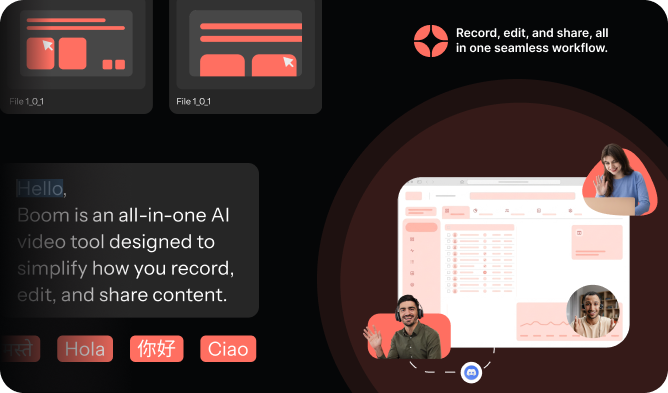
How We Delivered BoomShare
Capital Compute built BoomShare's desktop, iOS and Android products in a 10-week delivery. The approved case study reports a conversion uplift of more than 50 percent. This demonstrates cross-platform product delivery, not a controlled before-and-after test of the AI engineering workflow itself.
View the BoomShare case study → - Problem
- Build an AI-enabled screen and video platform across three product surfaces
- Delivery
- High-performance recording, AI video editing, instant sharing and more than 50 language options across desktop, iOS and Android
- Approved result
- 10-week delivery across three platforms and more than 50 percent conversion uplift
Service model 


Choose the Engineering Support Model That Fits the Outcome
Starter
Dedicated developer plus the core AI workflow
Best suited to
A defined backlog where your team owns architecture and prioritisation
Product Team
Dedicated developer plus part-time technical architect and the governed AI workflow
Best suited to
A product stream that needs technical direction as well as delivery capacity
Scale
Dedicated engineers plus technical architecture and an expanded AI workflow
Best suited to
Multiple workstreams, modernisation or a growing product with wider governance needs
Client testimonial
Real Clients, Real Engineering Outcomes
I was looking for frontend tech resources for my products - TweeFeed and ContentFeed - for a long time. I tried different freelancers, Upwork, hired in-house but kept having bug issues. Birju and his team saved me...

Janak Patel
Google Review (5 stars)
This company cares about the client. Most messages I get are about how they can help improve the product so it sells more. This deep concern about the success of the client's product, I would say, sets them apart.
.png)
Makrand Sant
Director, AK Systems Inc.
I have never had difficulty explaining any idea to any developer in Capital Compute. They pick things up fast and I generally have no time explaining again, so this setting works perfectly for me. They usually reach out by email with additional questions...

Roy Njeru
Founder, Mediapay
FAQs
Frequently Asked Questions
An AI engineering workflow is a controlled process for using AI during software delivery. It defines what context the model receives, which rules it must follow, how its output is independently reviewed, where humans approve decisions, and how project knowledge is retained.
A coding assistant is a tool. The workflow adds shared rule files, task-level context, cross-model pull request review, accountable human approval, testing and knowledge capture. Those controls make AI use inspectable across the team rather than dependent on individual prompting habits.
Software companies can use AI to assist with defined engineering tasks such as drafting code, refactoring, generating tests and supporting repository-aware development. A governed AI software development process adds rules, review gates, human approval and evidence around that assistance so speed does not come at the expense of software quality or accountability.
No. AI assists with defined engineering tasks and provides an additional review layer. A Capital Compute engineer remains accountable for architecture, business logic, security decisions, tests and approval before merge or release.
This is agreed explicitly during scoping. Capital Compute maps the code and data involved, your confidentiality and residency requirements, and the available model or hosting options before selecting the workflow. No universal answer should be assumed for every project.
The model used for review is separate from the one that assisted with the change. It examines the pull request for inconsistent assumptions, edge cases and rule breaches, then passes findings to the human reviewer. It supplements peer review and testing rather than replacing them.
Yes. The one-week free trial sprint applies the workflow to a real backlog item. You can review the code, relevant rule files, model-review findings, tests, documentation and sprint output before choosing a longer engagement.
You own the project assets from the first commit, including source code, project-specific rule files, tests, infrastructure definitions and documentation. Capital Compute does not require a proprietary delivery lock-in.
After the discovery call, Capital Compute provides a written scope summary and a scope-locked fixed-price estimate within 2 business days. The estimate reflects the actual backlog, constraints and agreed data boundary.
- FINAL STEP -
Ready to Test the AI Engineering Workflow?
The quickest way to evaluate the method is to run one real backlog item through it. The one-week free trial sprint gives you working code and an inspectable technical baseline before any longer commitment.
Average response time: Under 4 business hours
Service areas: UK USA Australia Singapore