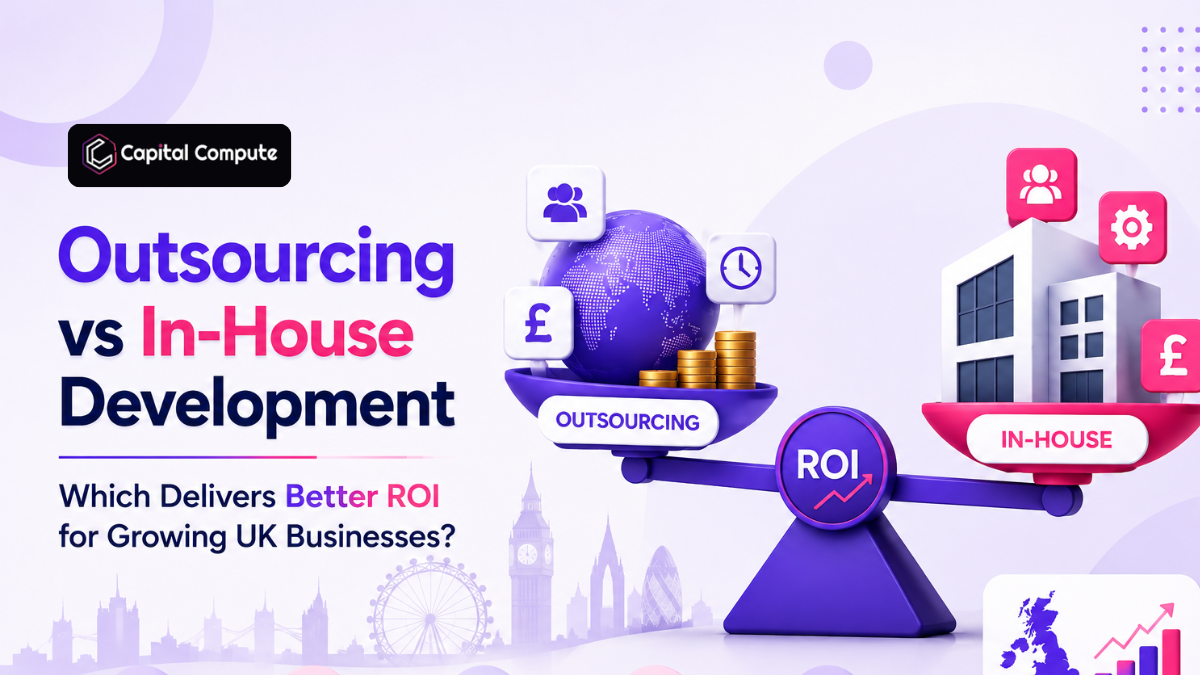
For startups and scaling enterprises, speed matters. Whether you need to launch a Minimum Viable Product in under three months or scale an existing platform to support thousands or millions of users, building everything with a local in-house team is not always practical or cost-effective.
This is where custom software development outsourcing becomes a smart business decision. However, outsourcing is not only about hiring developers at a lower cost. The success of your project depends on choosing the right software outsourcing business model, understanding the real cost of development, and selecting a partner with the right engineering culture.
For businesses planning custom software development or full stack development, the right outsourcing partner can help reduce development risk, improve delivery speed, and build a scalable digital product that supports long-term growth. Before choosing an approach, it is also useful to understand the difference between bespoke and custom software and how each term applies to business-specific development.
What Is Custom Software Development Outsourcing?
Custom software development outsourcing means working with an external software development company to design, build, test, and maintain software based on your business requirements.
Instead of hiring a full in-house team, businesses can outsource development to experienced engineers, UI/UX designers, quality assurance specialists, and project managers. This gives companies access to technical expertise without the cost and time involved in recruitment, onboarding, infrastructure, and long-term team management.
Outsourcing is commonly used for:
- MVP development
- Web application development
- Mobile application development
- SaaS product development
- Enterprise software development
- API development and integrations
- Full stack development
- Product scaling and modernization
But before starting a project, it is important to understand which software outsourcing business model fits your goals.
Choosing the Right Software Outsourcing Business Model
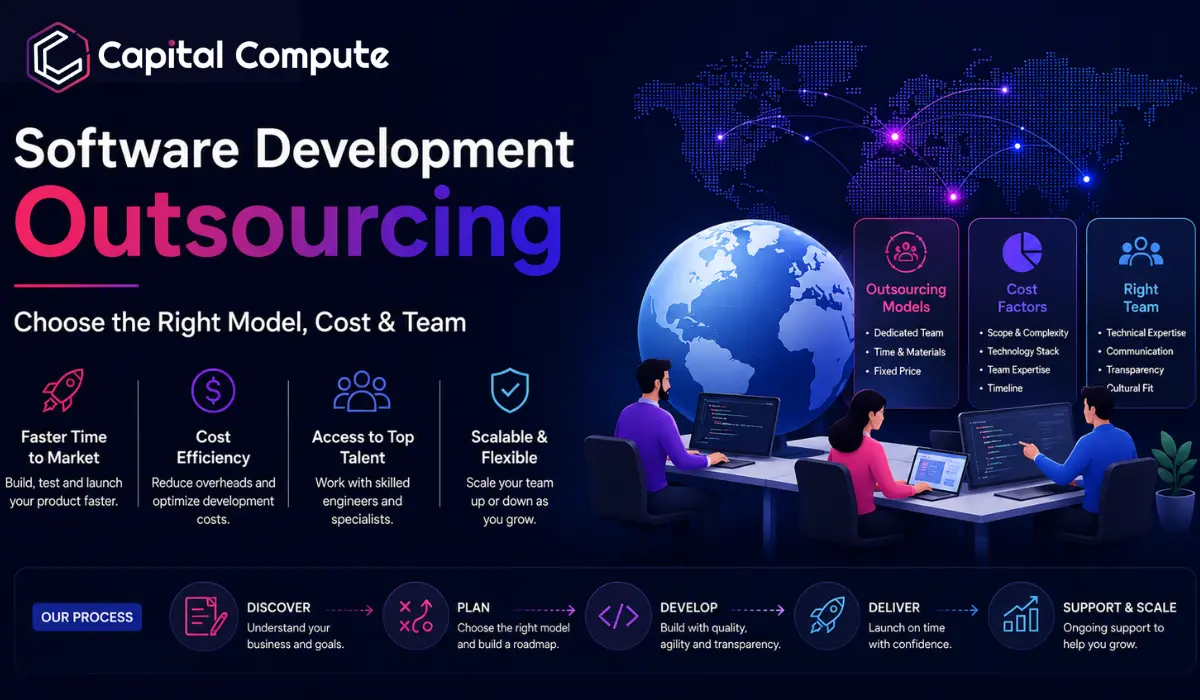
The way you structure your outsourcing partnership affects your budget, project control, timeline, and delivery risk. There are three common outsourcing models used in custom software development.
1. Dedicated Development Team Model
In the dedicated development team model, your outsourcing partner provides a complete team that works only on your product. This team may include developers, UI/UX designers, QA engineers, and a project manager.
This model works like an extension of your internal team. You can directly guide priorities, review progress, and adjust tasks based on business needs.
Best For:
- Long-term custom software development projects
- Startups with evolving product roadmaps
- Businesses that need continuous development
- Products that require regular updates and improvements
The dedicated team model is useful when the project scope is not fully fixed and the product may change based on market feedback, user testing, or business growth.
2. Time and Materials Model
In the time and materials model, you pay for the actual hours spent on the project. If a feature takes 40 hours to develop, you pay for 40 hours. If the project direction changes, the team can adjust without needing a completely new contract.
This model offers high flexibility and works well with agile development.
Best For:
- Agile software development projects
- Mid-sized custom software projects
- Projects with changing requirements
- Businesses that want flexibility during development
The time and materials model is ideal when you know the overall product goal but expect some features, priorities, or workflows to change during the development process.
3. Fixed-Price Model
In the fixed-price model, the project scope, timeline, and cost are agreed upon before development starts. This gives businesses better budget predictability, but it also makes the project less flexible.
Any change in features or scope usually requires a formal change request, which may increase cost or delay development.
Best For:
- Small projects
- Clearly defined MVPs
- Projects with fixed requirements
- Businesses with strict budgets
The fixed-price model works best when the requirements are clear from the beginning and there is little chance of major changes during development.
Understanding the Real Cost of Custom Software Development Outsourcing
One of the biggest mistakes businesses make is looking only at hourly rates. A low hourly rate does not always mean a lower total project cost.
The real cost of custom software development depends on several factors:
Hourly Rate x Total Hours + Project Management + Post-Launch Support = Real Project Cost
To plan your budget properly, you need to understand what actually affects the total cost of ownership.
Key Cost Drivers in Software Outsourcing
1. Scope and Complexity
The larger and more complex the project, the higher the development cost.
A basic web application or content management system will cost less than an AI-enabled enterprise platform, real-time data system, SaaS product, or mobile app with advanced integrations.
Complex projects may require:
- Custom dashboards
- Multi-user access
- Payment gateways
- API integrations
- Real-time data processing
- Admin panels
- Cloud infrastructure
- Security features
- Cross-platform mobile support
The more features and logic required, the more development hours are needed.
2. Technology Stack
The technology stack also affects development speed, scalability, and cost.
A modern and unified stack such as JavaScript or TypeScript with React, Node.js, or NestJS can help optimize development. It allows better code reuse, faster collaboration, and smoother full stack development.
Using a focused modern stack can be more efficient than working with outdated or fragmented technologies that require separate specialists for every layer of the application.
For businesses building scalable web apps, SaaS platforms, or mobile products, choosing the right technology stack from the start can reduce future maintenance and redevelopment costs.
3. Geographic Location
Software development rates vary based on location.
North America and Western Europe usually have higher development costs. Other technology hubs can offer strong engineering talent at more cost-effective rates.
For businesses looking to control budgets while maintaining quality, outsourcing can provide access to skilled developers, full stack engineers, and product teams without the overhead of hiring locally.
However, the lowest rate should not be the main deciding factor.
Very low-cost development may lead to poor code quality, weak documentation, technical debt, and expensive fixes later. A reliable partner should focus on maintainable code, scalable architecture, and long-term product success.
How to Choose the Right Custom Software Development Partner
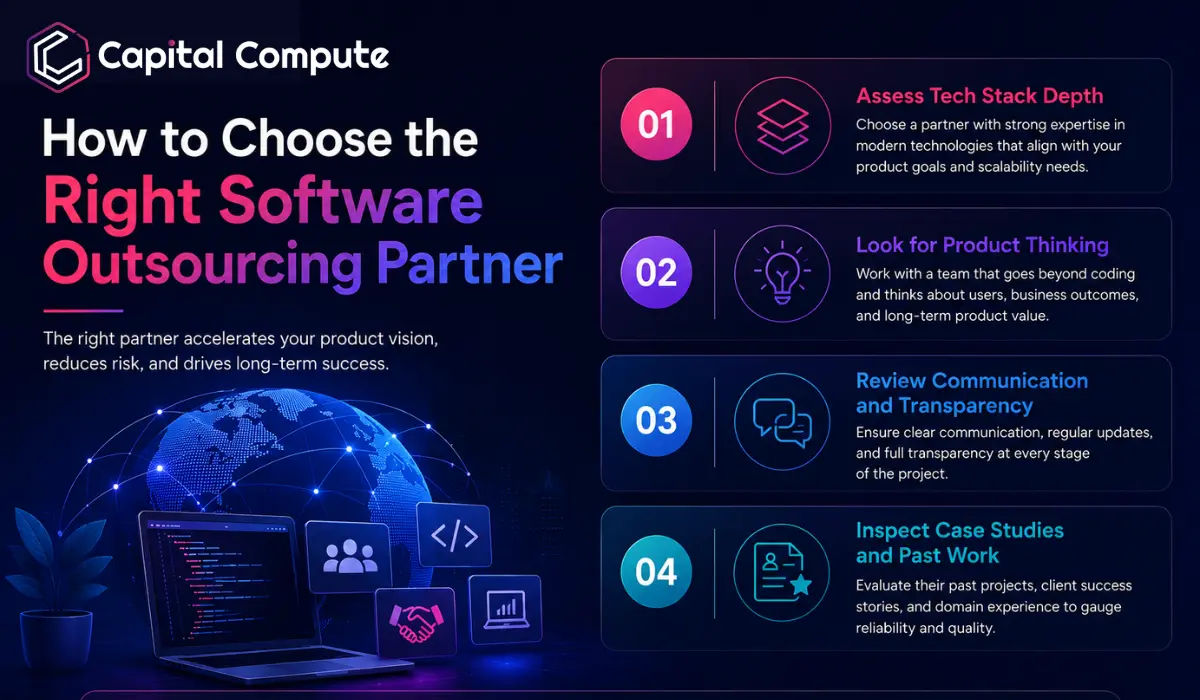
Choosing an outsourcing partner is not only a technical decision. It is also a trust, communication, and product alignment decision.
Here are the key areas to review before selecting a partner.
1. Assess Tech Stack Depth
A good software development partner should have strong expertise in the technologies your product needs.
Some agencies claim expertise in too many programming languages and platforms. This can sometimes mean they lack deep specialization.
For scalable web and mobile products, look for a team with strong experience in modern frontend and backend technologies such as React, Angular, Vue, Node.js, and related full stack frameworks.
Depth matters more than a long list of technologies.
2. Look for Product Thinking
A strong outsourcing partner should not only write code. They should understand your product goal and help you make better technical decisions.
A good partner will challenge weak assumptions, suggest better workflows, and help you prioritize the features that matter most.
For example, if you want to launch an MVP in under three months, the team should help you identify which features are essential for the first version and which ones can be added later.
This type of product thinking helps businesses launch faster without damaging the long-term architecture of the product. Following a structured custom software development process also gives teams clearer stages for discovery, design, development, testing and deployment.
3. Review Communication and Transparency
Good communication is one of the most important parts of outsourcing success.
Time zones can be managed when the right process is in place. What matters more is transparency, reporting, and access to progress.
Look for partners who provide:
- Regular sprint demos
- Clear progress reports
- Direct communication channels
- Transparent task tracking
- Access to GitHub or GitLab repositories
- Clear timelines and delivery updates
When communication is clear, businesses can make faster decisions and avoid confusion during development.
4. Inspect Case Studies and Past Work
Do not judge a software development company only by client logos. Review their actual case studies and project examples.
Look for evidence that they have built real, functional, and complex software products.
- Strong case studies may include:
- SaaS platforms
- Enterprise applications
- Custom dashboards
- API-driven systems
- Mobile apps
- IoT integrations
- Data-heavy platforms
You can also ask for technical references or anonymized code samples to understand their engineering standards.
The Advantages: Why Businesses Outsource
1. Significant Cost Efficiency
Building a local, permanent engineering team involves high overhead costs, including recruiting fees, onboarding, office space, hardware, and ongoing employee benefits. Outsourcing minimizes these costs, allowing you to pay exclusively for actual development hours or deliverables.
2. Immediate Access to Specialized Global Talent
The tech landscape moves fast, and local talent shortages are common, especially for modern javascript ecosystems (like React, Node.js, NestJS) or emerging fields like AI integration. Outsourcing eliminates geographic boundaries, connecting you instantly with specialized, high-performing squads who are already experts in the exact stack your product requires.
3. Accelerated Time-to-Market
In competitive markets, speed is everything. An outsourced development partner can typically bypass the months-long recruitment queue and deploy an established, cohesive team to your project from day one. Utilizing agile sprint methodologies ensures rapid iteration, enabling startups to take an MVP from initial consultation to production in under three months.
4. Unmatched Scalability & Resource Optimization
Product development cycles are rarely linear. You might need a team of 10 developers to build your initial release, but only a small maintenance crew post-launch. Outsourcing allows you to scale team sizes up or down fluidly based on project demands. It also optimizes internal resources, freeing your core team to focus on strategic business priorities like marketing, fundraising, and user feedback.
Why the Right Outsourcing Partner Matters
Custom software development outsourcing is not just about reducing cost. It is about gaining development capacity, technical experience, and product execution speed.
The right partner can help you:
- Build faster
- Reduce hiring pressure
- Improve technical quality
- Scale your product
- Launch MVPs quickly
- Maintain clean and readable code
- Avoid unnecessary technical debt
- Improve long-term software performance
For startups, outsourcing can help move from idea to MVP faster. For growing businesses, it can help scale platforms, modernize systems, and add new digital capabilities without slowing internal teams.
Capital Compute for Custom Software and Full Stack Development
Capital Compute helps businesses build scalable web applications, SaaS platforms, and custom digital products with a strong focus on clean engineering and modern full stack development.
The team supports businesses with:
- Custom Software Development
- Full Stack Development
- MVP Development
- SaaS Product Development
- Web Application Development
- Mobile App Development
- API Development
- Product Engineering
Capital Compute focuses on building software that is scalable, maintainable, and ready for long-term business growth.
Final Thoughts
Custom software development outsourcing can become a strong competitive advantage when done correctly. The key is to choose the right software outsourcing business model, understand the real cost of development, and work with a partner who values transparency, product thinking, and engineering quality.
A dedicated team works well for long-term and evolving projects. A time and materials model is best for flexible agile development. A fixed-price model is useful for small and clearly defined projects.
If you are planning to build a custom software product, MVP, SaaS platform, or full stack web application, choosing the right outsourcing partner can help you move faster while keeping quality and scalability in focus.
Ready to transform your idea into a production-ready digital product? Contact Capital Compute today to discuss your roadmap and choose the right software outsourcing business model for your project.