Most multi-step business processes fail at the handoff between systems, not within individual systems. Capital Compute designs agentic workflows by mapping the complete task sequence before development begins. We define what the agent retrieves, what it can act on, what it must verify and where human approval is required.
Deploy Autonomous
AI Agents Built
Into Your Workflows for Singapore Businesses
Custom AI Agents. Autonomous Workflow Automation.
Simple AI chatbots can only reply to prompts. Custom AI agents can reason, execute tasks, call internal APIs, query databases, and automate complex workflows autonomously. Capital Compute builds enterprise-grade AI agents, multi-agent coordination frameworks, and self-correcting automation loops that integrate securely into your software systems. Get a fixed-price estimate in 2 business days.
Get a Free AI Agent Estimate
Fixed-price estimate in 2 business days
Autonomous & secure multi-agent systems
Senior AI developers from day one
90-day post-launch support included
100% code ownership from day one
Fixed-price estimate in 2 business days
Autonomous & secure multi-agent systems
Senior AI developers from day one
90-day post-launch support included
100% code ownership from day one
Fixed-price estimate in 2 business days
Autonomous & secure multi-agent systems
Senior AI developers from day one
90-day post-launch support included
100% code ownership from day one
Fixed-price estimate in 2 business days
Autonomous & secure multi-agent systems
Senior AI developers from day one
90-day post-launch support included
100% code ownership from day one
SERVICES Our AI Agent
Our AI Agent
Development Services
An agent without access to business systems is effectively a chatbot with additional complexity. Our AI agent development services connect agents to APIs, databases, CRMs, ERPs, document repositories and internal applications through validated and typed tool calls.
Some workflows are too broad or specialised for a single agent. Capital Compute designs multi-agent architectures where specialised agents handle clearly defined parts of a workflow while an orchestration layer manages sequencing and handoffs.
An agent that acts without appropriate review points can be difficult to deploy in regulated or risk-sensitive environments. We build human review into the architecture from the beginning with approval gates, escalation paths, and rollback mechanisms.
Agents can repeat work or lose important context when previous task state is not retained correctly. Where a workflow requires memory, Capital Compute designs structured memory layers for conversation history, task state, prior decisions and retrieved records.
A production agent needs measurable performance and continuous monitoring. Capital Compute builds evaluation and monitoring into AI agent development projects rather than treating them as post-launch additions, tracking accuracy, latency, and drift.
DEFINITIONS & SCOPE
What an AI Agent Actually Is
The word is used for everything from a chatbot to a fully autonomous system, so it is worth being precise before going further.
| Feature | Chatbot | AI Agent |
|---|---|---|
| What it does | Answers a question | Completes a task with several steps |
| Access | Its knowledge and the conversation | Tools and systems: records, files, APIs, actions |
| Sequence | One exchange at a time | Plans, acts, checks the result, adapts |
| Failure mode | A wrong answer a person can ignore | A wrong action a person has to undo |
| What it needs | Good content and a clear scope | Defined limits, review points, and an audit trail |
That last row is why agent projects need more design than chatbot projects, and why we spend the first conversation on limits rather than capability.
AUTONOMY FRAMEWORK
The Autonomy Question in AI Agent Development
Every agent sits somewhere on a spectrum, and choosing the wrong point on it is the most common and most expensive design error in this category.
STOP 01
Assistive
The agent drafts or suggests, a person does everything.
Human Control: Total
Speed Gain: Small
STOP 02 Recommended Starting Point
Supervised
The agent completes the work, a person approves before it takes effect.
Human Control: High
Speed Gain: Substantial
STOP 03
Bounded Autonomous
The agent acts alone inside defined limits, escalating anything outside them.
Human Control: By rule
Speed Gain: Large
STOP 04
Autonomous
The agent acts without review. Control is audit-only, after the fact.
Human Control: Audit only
Speed Gain: Maximum
"Most business value sits at stops 2 and 3. Most failed projects started at stop 4."
We start most engagements at supervised and move rightward once the agent has a track record of your real work.
CAPABILITIES
What We Build AI Agents To Do
Our AI agent development work covers professional services and operational environments where processes have multiple verifiable steps.
Research and retrieval across systems
Information gathered from several sources without a person switching between them
Form and document completion
Structured output produced from records that already exist
Task assignment and routing
Work distributed by rule and by workload rather than by whoever notices it
Checking and reconciliation
A result verified against its source before a person sees it
Multi-step case handling
A whole process progressed rather than one step in it
Exception detection and escalation
The unusual case reaches a person early instead of completing silently
SECURITY & GOVERNANCE
Control, Review, and Audit in Every Agent Engagement
An agent that cannot be inspected is difficult to deploy in a business that needs accountability. Our architecture treats control and observability as core requirements.
Allow-listed tool access
The agent can reach only the systems and actions agreed during discovery.
Action-specific review points
Review requirements are defined by action type rather than applied identically across all agents.
Complete action logging
Each action is recorded with what the agent did, why it acted, and the source data used.
Designed escalation
When conditions are not met, the agent stops and requests human input as standard behaviour.
Rollback capability
Reversibility and rollback mechanisms are engineered before authorizing automated actions.
Data protection considerations
Data isolation and automated decision-making controls are built in from day one.
PRAGMATIC ENGINEERING
Where Agents Are the Wrong Answer
Capital Compute will also tell you when a conventional solution is more appropriate.
✕
A single-step task
If there is nothing to sequence, a function, workflow or prompt may be more appropriate than an agent.
✕
A deterministic process
If clear rules can solve the problem, traditional software is usually faster, cheaper and easier to audit.
✕
An undocumented process
An agent can automate an unclear process without fixing the underlying operational problem.
✕
Irreversible actions without review
If an action cannot be reversed and there is no suitable review mechanism, the process needs manual controls.
The objective is not to add an agent to every workflow. It is to use agentic architecture where it provides a measurable advantage.
COMPLIANCE & SECURITY
Enterprise Compliance Built Into Every Engagement
Autonomous agent architectures engineered to comply with international privacy and security standards.
| Obligation | What It Means for an Agent | Source |
|---|---|---|
| Automated decision-making rights | Where an agent contributes to a significant decision about a person, rights attach and shape the design | ICO & Global Regulators |
| Data protection & Privacy | Lawful basis, minimisation, and transparency across everything the agent can reach | GDPR & Privacy Frameworks |
| Secure AI development | Prompt injection matters more with agents, because the agent can act on what it reads | NCSC Guidelines |
| EU AI Act Compliance | Applies if the system is placed on the EU market, wherever you are based | EU AI Act |
Critical Security Rule: A chatbot tricked by malicious content gives a bad answer. An agent tricked by malicious content takes a bad action. Tool allow-listing and privilege separation are not optional in any production agent we ship.
From strategy to deployment
How Capital Compute Builds AI Agents
01
STAGE 1
Discovery & Workflow Analysis
We analyze manual workflows, determine required system integrations, and map security boundaries. Output: detailed agent specifications and fixed-price estimate.
02
STAGE 2
Architecture & Schema Design
We design reasoning loops, memory layout, tool calling schemas, and human-in-the-loop triggers. Output: technical architecture blueprint.
03
STAGE 3
Trial Sprint & Prototype
Our engineers build an initial increment against your real requirements to prove feasibility and speed before full rollout.
04
STAGE 4
Iterative Build
We build API middleware, write prompt templates, and set up multi-agent coordination with continuous sprint demos.
05
STAGE 5
Adversarial Testing & QA
We run automated evaluation tests to measure accuracy, test memory recall, and execute prompt-injection resistance tests.
06
STAGE 6
Deployment & Guardrails
We deploy to your private cloud with real-time audit logging, token-monitoring, and human-approval dashboards with 90-day warranty.
Why choose us
What Separates Our AI Agent Engineering From Generic Agencies
Fixed Sprints & Clear Accountability
We scope and agree on every sprint before it begins. The invoice is tied to delivery of that scope. If a sprint doesn't deliver what was committed, it isn't charged.

Dedicated Team
Your Dedicated AI Agent<br />Development Team
Standard outsourcing teams do not understand LangGraph, function-calling schemas, and agent evaluation metrics. Capital Compute embeds senior AI developers directly in your sprint cycle with direct communication, daily updates, and weekly reviews.
- Internal AI Developers: We never subcontract your project.
- Dedicated AI Architect: A single point of contact from day one through launch.
- Daily Updates: Async reports and weekly reviews on your schedule.
- PII-Safe Engineering: Built with strict compliance protocols.
Build your agent
TEAM
AI Agent Specialists That Oversee Each Engagement

Debasish Sahoo
Chief Architect
Debasish leads our AI system architecture and model integration strategy, focusing on high-performance vector search, LLMOps, and cost-optimised cloud deployment pipelines.
AI Architecture LLMOps RAG Systems AWS Cloud

Devdeep Ghosh
Senior Technology Consultant
Devdeep consults on conversational UX, API middleware, and secure vector databases, ensuring custom AI models connect seamlessly and securely to legacy backends.
LLM Integration API Design Vector DBs Node.js

Sayan Maity
VP Operations and Delivery
Sayan manages development delivery, agile milestones, and QA verification, keeping AI sprints aligned with business requirements and strict data protection.
Delivery Management QA Testing GDPR Compliance Agile Sprints
CASE STUDY 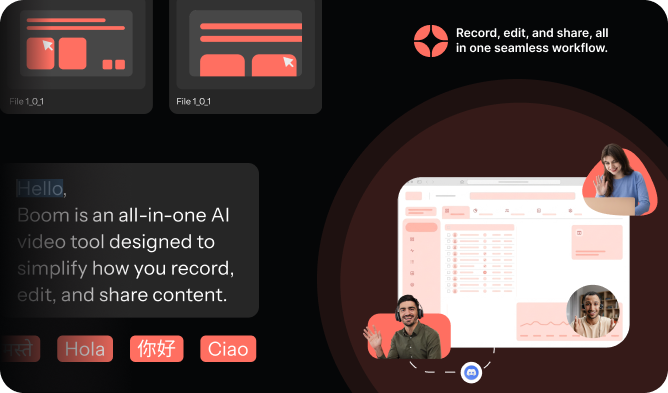
How we built BoomShare
View Case Study → AI-powered screen and video recording, built for teams.
We built the high-performance screen recording engine, AI video editor, and instant sharing platform. Native desktop app, mobile apps, and 50+ language dubbing.
10 WEEKS
DELIVERY TIME
DESKTOP + IOS + ANDROID
PLATFORMS
40%+
CONVERSION UPLIFT
Service model 


Choose from our hiring models
Starter
Developer + Basic AI workflow
- ★ Dedicated dev
- ★ AI workflow
- ★ Cost efficient
Most Popular
Developer + Part time Technical Architect + Basic AI Workflow
- ★ Dedicated dev
- ★ AI assisted delivery
- ★ Scalable structure
Scale
Developer + Part time Technical Architect + Advanced AI Workflow
- ★ Dedicated dev
- ★ Unlimited AI credits
- ★ Faster iterations
Client testimonial
Real clients, real outcomes
I was looking for frontend tech resources for my products - TweeFeed and ContentFeed - for a long time. I tried different freelancers, Upwork, hired in-house but kept having bug issues. Birju and his team saved me...

Janak Patel
Google Review (5 stars)
This company cares about the client. Most messages I get are about how they can help improve the product so it sells more. This deep concern about the success of the client's product, I would say, sets them apart.
.png)
Makrand Sant
Director, AK Systems Inc.
I have never had difficulty explaining any idea to any developer in Capital Compute. They pick things up fast and I generally have no time explaining again, so this setting works perfectly for me. They usually reach out by email with additional questions...

Roy Njeru
Founder, Mediapay
FAQs
Frequently Asked Questions
A chatbot answers. An agent acts. An AI agent development system can plan several steps, use approved tools and systems, check results and adapt its next action. A chatbot failure is usually a wrong answer that a person can disregard. An agent failure can become a wrong action that someone needs to reverse. That difference is why agent projects require more control design and testing than conventional conversational systems.
As much as the architecture specifies. Tool access can be allow-listed, review points can be defined by action type and actions can be logged. Capital Compute typically begins with supervised operation, where the agent prepares or completes work and a person approves the relevant action. Greater autonomy can then be introduced once the system demonstrates reliable performance against real cases.
Actions can be logged with the action performed, the reason for the action and the information used to support it. This creates an audit trail that helps engineering and operational teams investigate behaviour, identify failures and understand how a task progressed through the workflow.
The system should have defined behaviour for failure conditions. Depending on the action and workflow, the agent may escalate to a person, refuse the action and flag the issue, or perform a reversible action that can be rolled back. Irreversible actions can be placed behind mandatory human review.
Data handling is agreed during scoping rather than assumed. Where confidentiality, data residency or contractual requirements restrict what information can leave your environment, the architecture can be designed around those requirements.
Yes. The risk is particularly important for agents because an agent may act on information it reads. Capital Compute addresses this through controls such as tool allow-listing, privilege separation, input validation and adversarial testing before production release.
Cost depends primarily on workflow complexity, the number of systems the agent must access, the required review controls and integration requirements. A focused proof of concept typically ranges from £20,000 to £50,000. A production multi-system agent typically ranges from £50,000 to £120,000+. Capital Compute provides a scope-locked fixed-price estimate within 2 business days.
You own the source code, prompts, tool definitions, evaluation suites, infrastructure definitions and documentation from the first commit. There is no lock-in requirement.
Yes. Around half of Capital Compute's active engagements operate on an outcome-based billing model. Each sprint is scoped and agreed in writing before development begins, with billing linked to successful delivery of the agreed sprint outcome.
Yes. Qualifying engagements can begin with a structured one-week trial sprint at no cost against a defined part of your actual backlog.
- FINAL STEP - Ready to Deploy Autonomous AI Agents
Ready to Deploy Autonomous AI Agents
That You Own Outright?
AI is most powerful when it acts. Simple chatbots only scratch the surface of automation; true ROI comes from agents that connect to your databases, handle APIs, and execute tasks.
Capital Compute builds secure, agentic software with robust function-calling schemas, persistent memory, and admin approval dashboards, giving you automation you can trust.
Our scoping call takes 30 minutes. You leave with a clear technical roadmap, an integration plan, and a fixed-price estimate in 2 business days.
Average response time: <4 business hours
USA • UK • Canada • Australia • Middle East