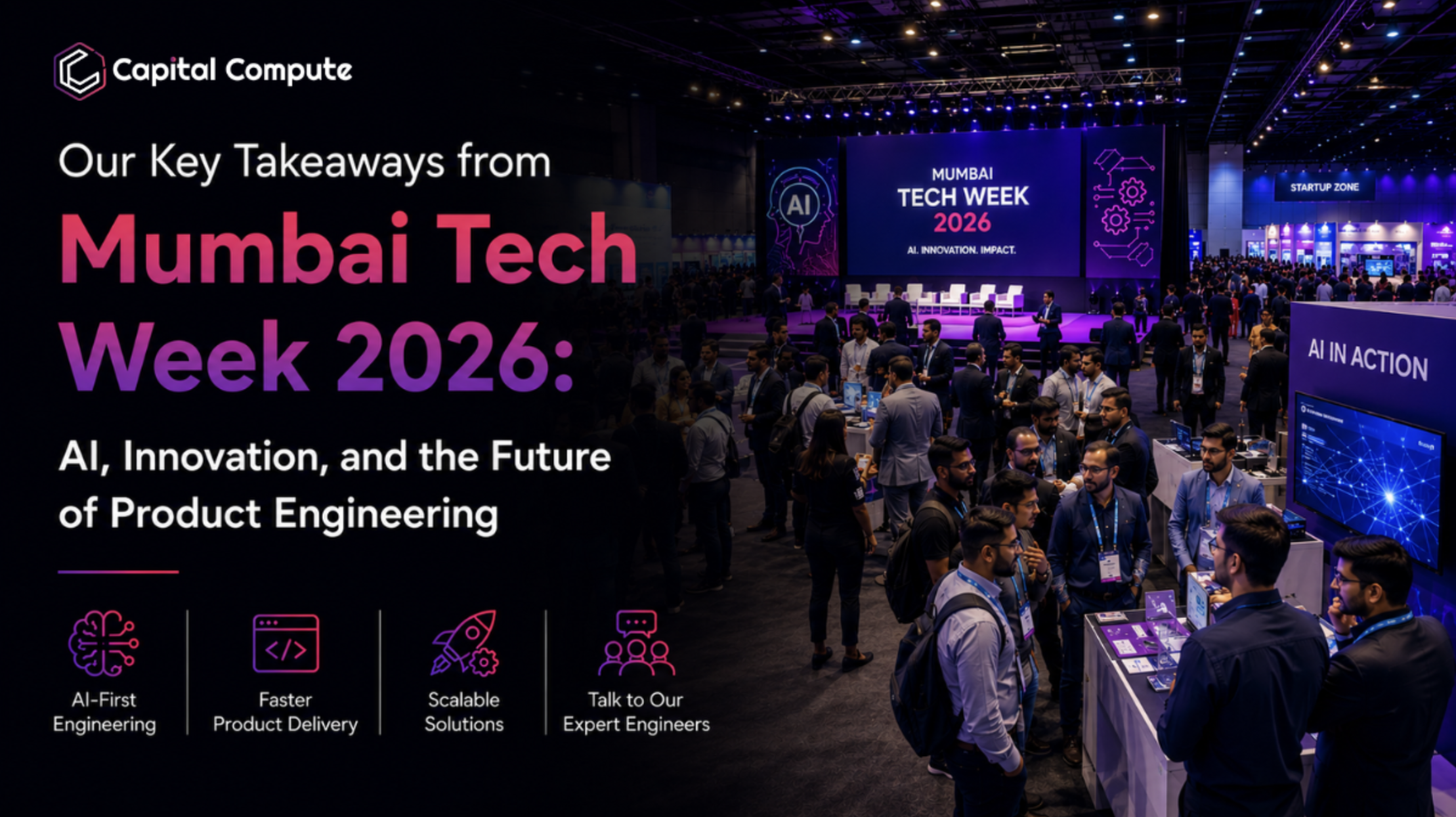
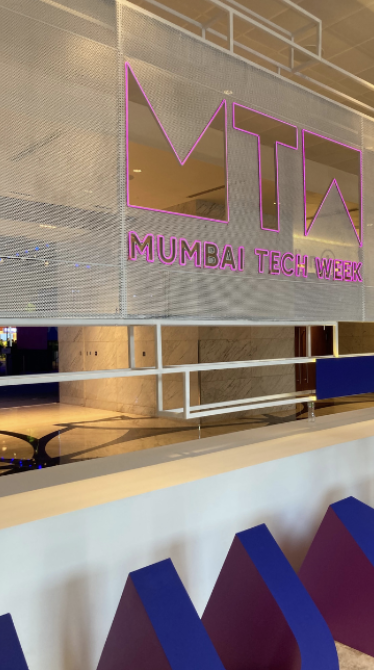
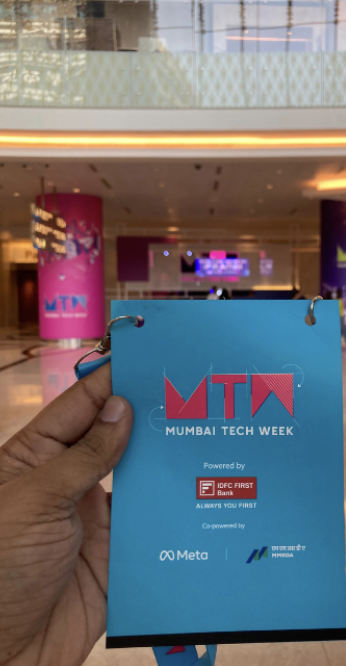
Mumbai Tech Week 2026 brought together some of the brightest minds in India’s technology ecosystem. Over two action-packed days at the Jio World Convention Centre, founders, operators, investors, product leaders, and AI innovators gathered to discuss one of the most transformative shifts the industry has ever seen: the rise of Artificial Intelligence.
Representing Capital Compute, founders Udit Sharma and Mansi Shah attended the event to connect with innovators, explore emerging trends, and understand how businesses are adapting to an increasingly AI-driven world.
What we experienced over those two days was more than just another technology conference. It was a glimpse into how AI is reshaping products, businesses, and the future of software engineering.
Two Days of Energy, Innovation, and Ambition
From the moment we entered the venue, the energy was impossible to ignore.
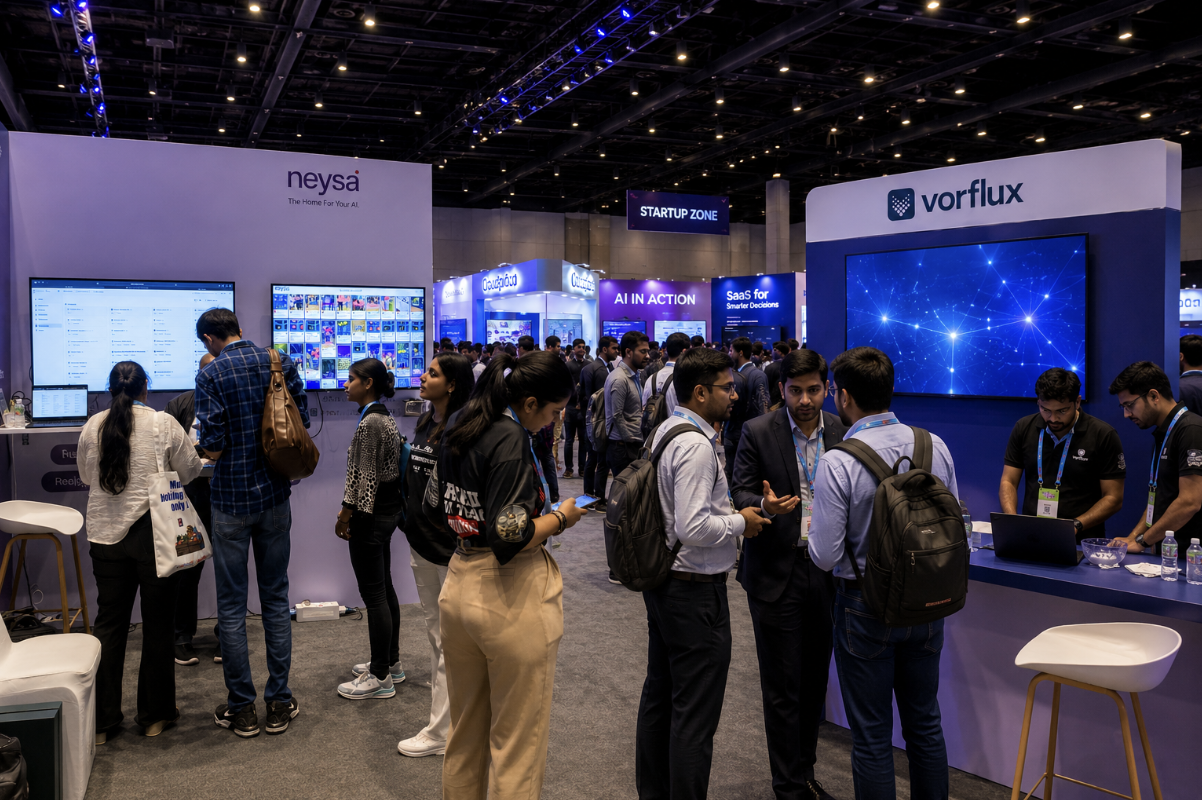
The halls were filled with conversations about AI, automation, product innovation, and entrepreneurship. Startup founders showcased groundbreaking products, technology leaders discussed AI adoption strategies, and enterprises explored how emerging technologies could reshape their operations.
One of the most inspiring aspects of the event was seeing the next generation of founders confidently building AI-native businesses.
These entrepreneurs aren’t simply adding AI features to existing products. They’re building entirely new businesses around AI capabilities, reimagining traditional workflows, and solving real-world problems through intelligent automation.
At the same time, established enterprises were actively discussing their transition into the AI era. Conversations around Agentic AI, Voice Agents, and intelligent automation dominated many discussions, highlighting how seriously organizations are approaching AI transformation.
While questions remain around mass adoption and long-term user behavior, it’s clear that businesses are moving forward aggressively.
The AI shift is no longer theoretical.
It’s happening now.
The Sessions and Keynotes That Stood Out
Technology events often feature ambitious predictions about the future. What made several sessions at Mumbai Tech Week particularly valuable was their focus on practical implementation rather than hype.
AI’s Impact on Financial Services
One keynote that stood out came from the CEO of Angel One Group.
The discussion focused on how AI agents are beginning to influence broking and trading operations. While much attention is given to AI’s capabilities, the session emphasized something equally important: governance.
As businesses increasingly rely on AI-driven decision-making, establishing proper guardrails, controls, and oversight mechanisms becomes critical.
The message was clear.
AI can create tremendous opportunities, but responsible implementation will determine long-term success.
Understanding the Economics of AI
Another highly insightful session came from Neysa’s Chief Product Officer.
One topic that resonated strongly was AI cost management.
Many organizations focus on what AI can do but pay less attention to the operational costs behind large-scale AI usage. The session highlighted how token consumption, model selection, and inefficient workflows can significantly impact business economics.
For startups and growing businesses, this serves as an important reminder:
AI strategy isn’t just about technology.
It’s also about sustainability and commercial viability.
Perspectives from OpenAI and Anthropic
Sessions featuring leaders from OpenAI and Anthropic offered valuable insights into global AI adoption trends.
One particularly interesting observation was India’s growing significance within the global AI ecosystem.
The scale of AI adoption happening across Indian businesses, startups, and consumers continues to position the country as one of the world’s most important AI markets.
Conversations That Left a Lasting Impression
While keynote sessions provided strategic insights, some of the most valuable learnings came from conversations happening throughout the venue.
Most of our interactions were with founders.
And those discussions revealed something incredibly encouraging.
Many entrepreneurs are moving beyond AI experimentation and focusing on building products that create tangible value.
Across industries, founders demonstrated how their solutions are solving meaningful problems, improving workflows, and positively impacting users’ lives.
These weren’t just technology showcases.
They were examples of AI being applied to real-world challenges.
Those conversations reinforced a broader trend we’ve observed throughout the industry:
The most successful AI products are not necessarily the most technically complex.
They’re the ones solving genuine customer problems.
One particularly memorable interaction was with Raj Saxena from LogisticsNow, where discussions centered around innovation, technology adoption, and opportunities emerging within evolving AI ecosystems.
The Biggest Trends We Observed Across the Event
Every major technology event has recurring themes.
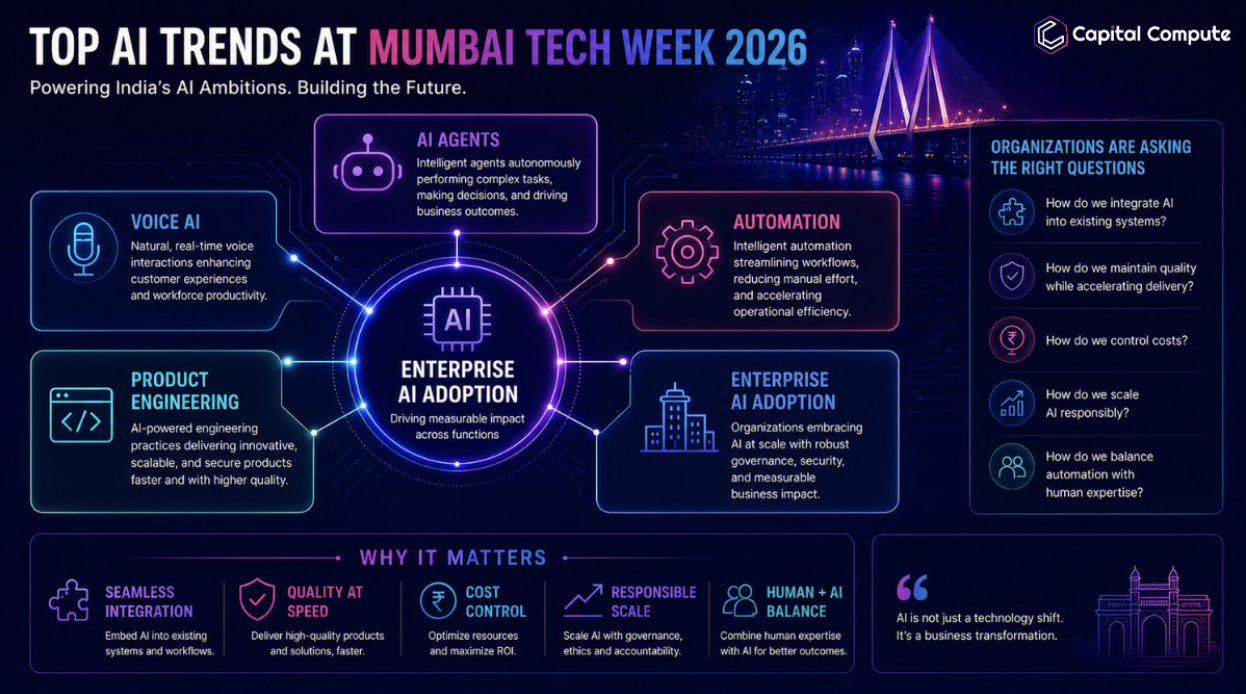
At Mumbai Tech Week 2026, four trends consistently surfaced across sessions, booths, and conversations.
AI Agents Are Moving Into Production
AI agents are rapidly moving beyond prototypes and proof-of-concepts.
Businesses are actively exploring how intelligent agents can automate workflows, support decision-making, and improve operational efficiency.
Voice AI Is Becoming Mainstream
Voice agents were one of the most discussed technologies throughout the event.
From customer service applications to workflow automation, businesses are increasingly exploring voice-first experiences that feel natural, efficient, and scalable.
Businesses Are Moving Beyond Experimentation
Perhaps the most significant shift is that organizations are no longer asking:
“Should we use AI?”
Instead, they’re asking:
“How do we implement AI effectively?”
This represents a major evolution in market maturity.
AI Adoption Is Becoming an Operational Strategy
AI is no longer treated as a standalone initiative.
Forward-thinking companies are integrating AI into broader business processes, product strategies, and operational frameworks.
What the Event Reinforced About Our AI-First Engineering Approach
One of the most valuable outcomes of attending Mumbai Tech Week was seeing many of our existing observations validated through conversations with founders and technology leaders.
At Capital Compute, we’ve consistently believed that AI creates the most value when integrated into engineering workflows rather than treated as an isolated feature.
The discussions we had throughout the event reinforced this perspective.
Organizations are increasingly searching for answers to questions such as:
- How do we integrate AI into existing systems?
- How do we maintain quality while accelerating delivery?
- How do we control costs?
- How do we scale AI responsibly?
- How do we balance automation with human expertise?
These are engineering challenges as much as they are business challenges.
The future won’t belong to organizations that simply adopt AI tools.
It will belong to organizations that effectively redesign workflows around intelligent systems while maintaining strong engineering foundations.
Representing Capital Compute
Throughout the event, Capital Compute was represented by founders Udit Sharma and Mansi Shah.
While we weren’t participating in panels or presentations this year, we had meaningful conversations with founders, operators, and technology leaders throughout the event.
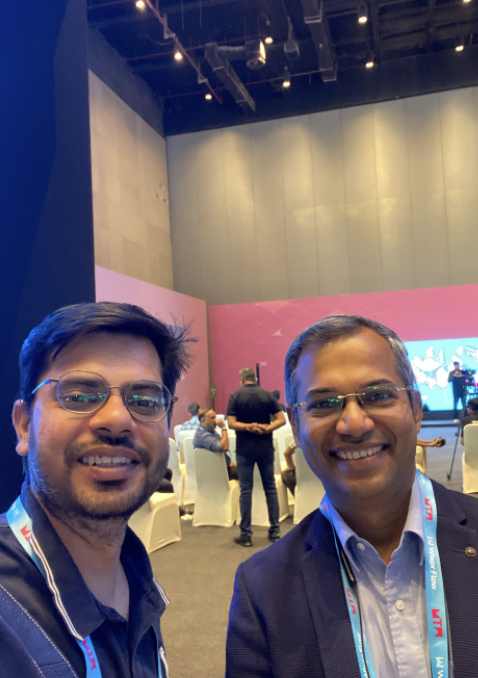
The response to our perspective on AI-first engineering was overwhelmingly positive.
Many attendees resonated with the idea that AI should enhance engineering capabilities rather than replace engineering expertise.
That distinction continues to become increasingly important as businesses evaluate how AI fits into their long-term growth strategies.
India’s AI Moment Is Here
One of the strongest themes emerging from Mumbai Tech Week was India’s growing importance within the global AI ecosystem.
The pace of innovation happening across Indian startups is remarkable.
Founders are building ambitious products.
Teams are adopting AI at scale.
Businesses are rethinking traditional processes.
Consumers are gradually becoming more comfortable with AI-powered experiences.
Perhaps most importantly, the quality of ideas being developed by young entrepreneurs was genuinely inspiring.
Some of the brightest innovations we encountered came from founders tackling complex problems with creativity, determination, and a strong understanding of emerging technologies.
India’s role in the future of AI appears stronger than ever.
What Happens Next?
The conversations that started during Mumbai Tech Week won’t end with the event itself.
Over the coming weeks, we’ll be reconnecting with many of the founders, operators, and business leaders we met during those two days.
Our focus will be on identifying opportunities for:
- Collaboration
- Knowledge sharing
- Product innovation
- Technology partnerships
Events create introductions.
Meaningful relationships are built afterward.
And we’re excited to continue those conversations.
Final Thoughts
“The AI landscape is changing at a rapid pace and India is at the center of it. Anthropic and Open AI claims that India is their second biggest market after the USA, which shows how quickly AI is becoming part of our daily lives. The other revelation was seeing how young founders are building some of the most inspiring and ambitious ideas we’ve encountered.”
— Udit Sharma, Co-Founder, Capital Compute
Mumbai Tech Week 2026 provided a valuable glimpse into where technology is heading next.
The conversations, products, and ideas we encountered reinforced one simple belief:
The future belongs to organizations that combine strong engineering foundations with practical AI implementation.
And that future is arriving faster than most people realize.